Netanyahu Discusses Ceasefire Possibilities with Trump Amid Ongoing Gaza Conflict


Washington, D.C. – July 8, 2025
Israeli Prime Minister Benjamin Netanyahu said on Tuesday that he expects to discuss a potential ceasefire agreement with Hamas during his meeting with former U.S. President Donald Trump, as diplomatic efforts continue to broker a temporary halt to the violence in Gaza.
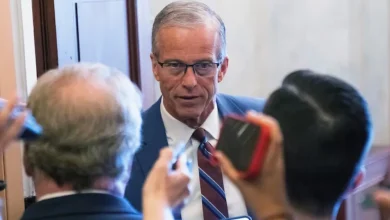
Speaking to reporters at the U.S. Capitol following a closed-door session with House Speaker Mike Johnson, Netanyahu emphasized Israel’s strategic goals in the Gaza conflict, including the release of hostages and the dismantling of Hamas’ military and governance structures.
“We have still to finish the job in Gaza—release all our hostages, eliminate and destroy Hamas’ military and governance capabilities,” Netanyahu stated. “Gaza must have a different future—for our sake, for everyone’s sake. No country will settle for less. We certainly will not. These are all things I discussed with President Trump, and I may discuss further with him later in this visit.”
Netanyahu’s remarks come at a critical juncture in ongoing negotiations, as Israel continues its military operations in Gaza while global pressure mounts for a humanitarian pause.
Optimism from U.S. Officials on Ceasefire Timeline
At the U.S. State Department, spokesperson Tammy Bruce reiterated the Biden administration’s optimism that a ceasefire deal could be reached “by the end of the week.” However, she stopped short of providing concrete details on the progress of negotiations or what specifically underpinned their confidence.
“We are hopeful that by the end of this week we’ll have an agreement that brings us to a 60-day ceasefire,” Bruce said during a press briefing, echoing earlier comments made by Steve Witkoff, Trump’s special envoy to the Middle East.
While optimism prevails in Washington, negotiations remain delicate. Talks reportedly involve U.S., Egyptian, and Qatari mediators, and aim to achieve a temporary ceasefire, facilitate humanitarian aid, and secure the release of Israeli hostages held by Hamas since the October 2024 attacks.
Background: The Gaza Conflict and the Road to Ceasefire
The current phase of the Israel-Hamas conflict began in late 2024 and has resulted in thousands of casualties, significant displacement in Gaza, and increasing regional instability. Efforts to reach a ceasefire have repeatedly stalled due to disagreements over key terms, including hostage exchanges, military withdrawals, and long-term governance of Gaza.
Israel remains adamant that any agreement must not allow Hamas to retain military capabilities or control over the territory. Netanyahu’s remarks reflect Israel’s broader strategic vision: a post-Hamas Gaza administered by alternative, potentially international or regional authorities—though no clear consensus exists on who might fill that role.
Political Optics and Diplomatic Crossroads
Netanyahu’s visit to Washington comes at a politically sensitive time. While officially coordinated through diplomatic channels, his meeting with former President Trump, rather than current President Joe Biden, signals a significant political subtext. Trump has long touted his Middle East record, including the Abraham Accords, and remains a key player in shaping conservative support for Israel in the U.S.
Meanwhile, Biden’s administration has struggled to balance support for Israel with growing domestic and international calls for restraint, particularly amid mounting civilian casualties in Gaza.
What Comes Next?
As ceasefire talks continue behind closed doors, hopes remain cautiously high that a breakthrough can be achieved. A 60-day truce, if agreed upon, could offer a critical humanitarian reprieve and potentially open the door for longer-term solutions to the Gaza crisis.
However, the path forward remains uncertain. With Israel determined to eliminate Hamas, and with diplomatic pressure rising, the coming days may prove decisive—not only for the people of Gaza and Israel, but for the geopolitical stability of the entire Middle East.
Stay tuned for updates as negotiations unfold in Washington, Doha, and beyond.