Ecobank tests global appetite for Africa-focused nature finance with landmark bond

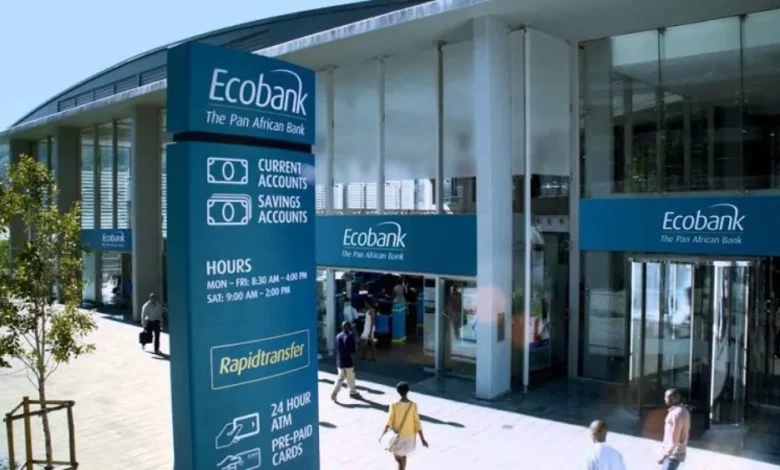
Ecobank Group has pushed the boundaries of sustainable finance after raising $450 million through a landmark Nature Bond listing on the London Stock Exchange—the first time a commercial bank has issued such an instrument under the International Capital Market Association (ICMA) framework.
Investor demand far exceeded expectations. The transaction closed with an orderbook of more than $1.36 billion, almost four times the initial $350 million target, allowing Ecobank to upsize the deal by $100 million and tighten pricing by 50 basis points. The bond also earned Moody’s highest sustainability quality score—SQS1 Excellent—underscoring strong institutional confidence in the structure.

Why this bond stands out
Unlike conventional green bonds, ICMA’s Nature Bond designation imposes stricter requirements. Proceeds must directly support nature-positive outcomes and help transform economic activities that drive biodiversity loss, rather than broadly funding environmental projects. This higher bar is intended to reassure investors increasingly wary of sustainability labels that lack measurable impact.
Ecobank’s bond is structured to channel capital into sustainable agriculture, biodiversity protection, and water infrastructure across 24 African markets. Target beneficiaries include smallholder farmers adopting climate-smart practices, agri-processors with verified deforestation-free supply chains, and operators protecting freshwater ecosystems critical to local livelihoods.
Each eligible loan is tied to seven independently verified sustainability conditions, alongside deforestation screening and supply-chain traceability rules—measures designed to ensure outcomes on the ground, not just commitments on paper.

Closing Africa’s nature finance gap
Africa is home to roughly a quarter of the world’s biodiversity, yet attracts less than 3% of global nature finance. That imbalance, according to Ecobank Group CEO Jeremy Awori, was the driving force behind the transaction. He said the bank spent years building governance and accountability systems to make nature finance credible and scalable for African economies.
Echoing that view, Ecobank’s Group Head of Sustainability Rachael Antwi said the bond was designed to connect global capital to the real economy—farmers, cooperatives, and water operators—rather than to niche conservation vehicles that struggle to scale.
Where the money will go—and where it won’t
Ecobank says 81% of the eligible lending pool will be deployed in biodiversity-priority countries where agricultural land-use change is the main driver of ecosystem loss. Côte d’Ivoire, Burkina Faso, and Ghana are highlighted as key markets. The investor base included both international and African institutions, which the bank says proves it can mobilise capital across regions at once.
Notably absent from the priority list is Nigeria, despite Ecobank’s sizable footprint there and the country’s large smallholder farming sector. The bank has not publicly explained whether regulatory considerations, risk assessments, or portfolio constraints influenced that exclusion—or whether Nigeria may feature in future issuances.

The real test ahead
As pressure mounts globally to fund biodiversity protection, the significance of Ecobank’s Nature Bond will ultimately be judged beyond its oversubscribed orderbook. Its success will hinge on whether the attached sustainability conditions deliver verifiable improvements at farms and watersheds—and whether the promised capital reaches the communities whose livelihoods depend on healthy ecosystems.