GTBank Adopts Airtime-Based Billing for USSD Banking Transactions Starting June 18

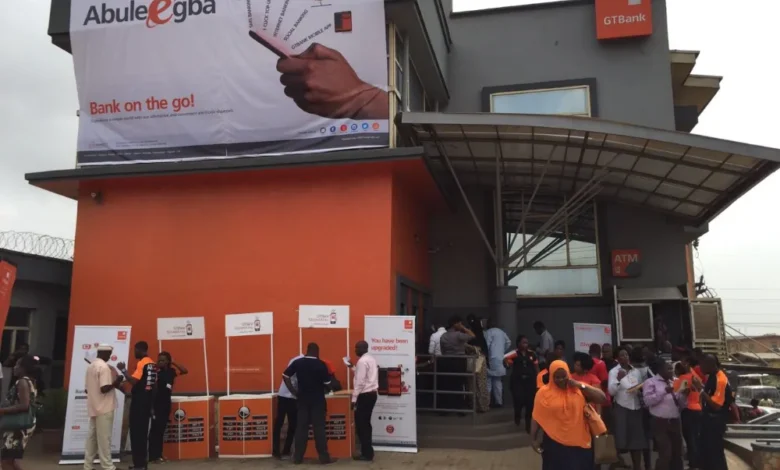
In a move aligned with regulatory directives and telecom sector reforms, Guaranty Trust Bank (GTBank) has officially commenced a new billing model for USSD banking services, notifying customers that N6.98 per session will now be deducted directly from their airtime balances rather than from bank accounts. The update took effect today, June 18, 2025, positioning GTBank as the second commercial bank in Nigeria to implement this model.
“Dear Customer, please be informed that effective 18 June 2025, the N6.98 USSD fee will be deducted from your airtime balance, no longer from your bank account. Thank you,” the bank stated in a customer notification message.
Why the Switch to Airtime Billing?
The change is part of a coordinated effort by the Nigerian Communications Commission (NCC) and the Central Bank of Nigeria (CBN) to address long-standing tensions over a ₦250 billion USSD debt owed by banks to telecom providers like MTN, Airtel, and Globacom.
Previously, telecom operators were providing the infrastructure for USSD banking services, while banks deducted the associated service charges from customers’ accounts. However, the proceeds were not being fully remitted to the telcos, resulting in growing debts and operational friction.
With telcos threatening to terminate USSD services due to mounting losses, the NCC and CBN stepped in with a resolution framework in December 2024. This outlined a structured debt repayment plan and called for a shift to end-user billing, where telcos directly collect USSD fees from customers via airtime deductions.
Timeline for Debt Resolution
As part of the official agreement between banks and telecoms:
-
85% of the debts incurred after February 2022 must be paid by December 31, 2024.
-
60% of debts incurred before the API switch in February 2022 must be settled by January 2, 2025.
-
Full debt settlement is expected by July 2, 2025.
-
Going forward, 85% of monthly USSD invoices must be cleared within 30 days of issuance.
Recent updates from industry sources indicate that banks have been complying with the debt settlement roadmap, further smoothing the path for broader implementation of the new billing structure.

UBA Paved the Way
United Bank for Africa (UBA) was the first bank to implement the airtime billing model, beginning June 3, 2025. In a customer advisory, UBA explained that USSD charges of ₦6.98 per 120-second session would now be deducted directly by mobile network operators (MNOs), subject to customer consent.
The bank also clarified that customers would be prompted to accept or reject the transaction at the beginning of each USSD session. If the user declines or lacks sufficient airtime, the session will not proceed.
“If you do not wish to continue using USSD banking under this new model, you may choose to discontinue use of the USSD channel,” UBA noted.

The Bigger Picture: Future of USSD in Nigeria
Despite the rise of internet and mobile app banking, USSD remains a critical digital channel, particularly for rural, low-income, and unbanked populations with limited access to smartphones or data connectivity.
By adopting this model, banks and telecom operators are:
-
Ensuring service continuity without risking telco shutdowns.
-
Providing transparency in fee deductions.
-
Reducing the financial strain on operators delivering the infrastructure.
However, this move could prompt concerns about accessibility, as some users may find airtime deductions less manageable, especially if they are unaware of the session charges or run out of credit.
What’s Next for Customers?
GTBank customers using USSD services via 737# and other codes should:
-
Ensure they have sufficient airtime before initiating transactions.
-
Expect a ₦6.98 charge per session lasting up to 120 seconds.
-
Watch for a consent prompt at the start of each transaction.
-
Be aware they can opt out of the USSD service if they prefer.

For now, the airtime billing model appears to be the new normal, with more Nigerian banks expected to follow suit in the coming weeks as the CBN and NCC enforce wider compliance with the debt resolution framework.
As the financial and telecom sectors navigate this evolution, the shift to user-funded USSD access could reshape how millions of Nigerians interact with their banks—bridging gaps in digital inclusion, but also demanding greater customer awareness and education.