VP Shettima Courts Vitol Group, Touts Nigeria’s $25 Billion Gas Pipeline as Key to Energy Future

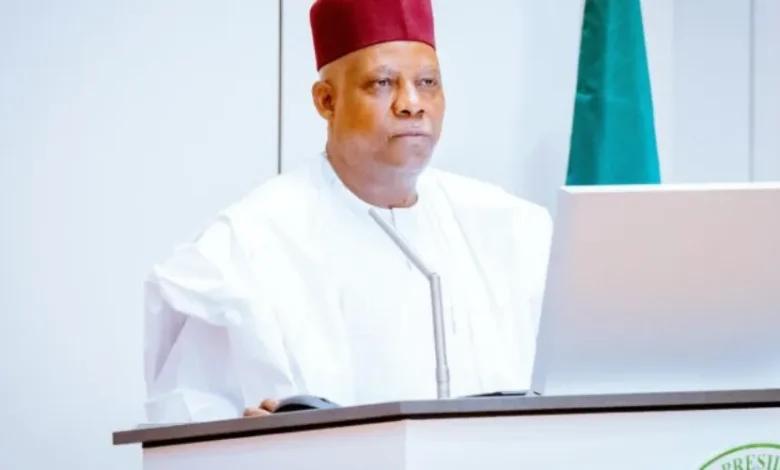
Vice President Kashim Shettima on Monday held high-level talks with executives of global energy giant Vitol Group at the Presidential Villa in Abuja, urging the company and other international investors to take full advantage of Nigeria’s rapidly evolving gas sector.
Shettima emphasized that the Nigerian government is accelerating efforts on the $25 billion Nigeria-Morocco Gas Pipeline project, a strategic infrastructure venture aimed at delivering natural gas from West Africa to Europe. The initiative, he noted, is part of the broader economic reforms championed by President Bola Ahmed Tinubu, which have redefined Nigeria as a key player in the global energy landscape.
Tapping into Nigeria’s Gas Wealth
Speaking during the meeting, the Vice President described Nigeria not merely as an oil-producing country, but as a gas-rich nation whose vast reserves present a stable, transparent, and lucrative investment environment.
“I urge you to key into our nation’s energy transition programme,” Shettima told the Vitol delegation. “I want you to utilise your dominance in the Liquefied Natural Gas (LNG) and Associated Petroleum Gas (APG) sub-sectors. The world is changing, and ours is actually a gas—not an oil—economy. We have the eighth-largest gas reserve in the world.”
According to him, Nigeria’s gas sector remains relatively free of government interference—an important signal for prospective investors. “The Nigeria Liquefied Natural Gas Limited (NLNG) has been largely insulated from government interference. What we are getting from the NLNG is so predictable. This is why we are seriously exploring the option of taking our gas to Europe.”
Shettima praised President Tinubu’s “courageous leadership” in executing long-overdue structural reforms, including the removal of fuel subsidies, unification of exchange rates, and an overhaul of Nigeria’s tax system.
“In the past 25 years, we haven’t had a leader as courageous as President Tinubu,” he said.
Government Seeks Investment, Not Just Capital
The Vice President made it clear that the Federal Government is not only seeking capital but also technical expertise and long-term collaboration on the gas pipeline project.
“We urge you to use your influence, contacts, and goodwill to mobilise resources for this project,” Shettima said. “It will be a completely transparent management structure. I will urge you to come on board with this project.”
Vitol Reaffirms Commitment to Nigeria
In response, Vitol Group’s Chief Financial Officer, Jeffrey Dellapina, reaffirmed the company’s longstanding partnership with Nigeria and expressed optimism about deepening that relationship.
“We do want to maintain an understanding that Vitol is committed, and we are always available to deploy capital when needed,” Dellapina said. “We want to stay in this country and evolve with you.”
Vitol’s Head of Public Affairs, Murtala Baloni, also spoke during the meeting, citing the company’s collaborative efforts with Nigerian partners. He highlighted Vitol’s $300 million contribution to Project Gazelle—a crude oil-backed forward-sale facility by NNPC Limited—during the COVID-19 pandemic as an example of its ongoing investment in Nigeria’s energy future.
About the Nigeria-Morocco Gas Pipeline Project
The Nigeria-Morocco Gas Pipeline (NMGP), first agreed upon in June 2018, is a monumental project that aims to transport natural gas from Nigeria to Morocco and onward to Europe, while also supplying gas to several countries in the West African sub-region.
At approximately 5,660 kilometers in length, the pipeline is expected to pass through 15 African nations. Its design supports broader regional goals of enhancing trade, improving access to electricity, and accelerating development across the continent.
The project will unfold in multiple phases:
-
Phase One connects Morocco to gas fields near Senegal and Mauritania.
-
Phase Two extends the pipeline from Nigeria to Ghana.
-
Phase Three links the Ivory Coast to Senegal.
A joint venture between Nigeria and Morocco has been established to oversee the management of the project.
Beyond its economic and geopolitical implications, the NMGP is also expected to significantly reduce gas flaring in Nigeria, promote the diversification of energy sources, and generate employment opportunities for millions.
Looking Ahead
As global demand for cleaner energy sources grows, Nigeria’s gas sector is increasingly seen as a key lever for economic growth and regional influence. With strong investor confidence and transparent government backing, initiatives like the NMGP could mark a turning point for the country’s energy future.
The Tinubu administration appears determined to seize this moment—and Vice President Shettima’s meeting with Vitol Group signals that Nigeria is not only open for business, but also ready to lead in Africa’s energy transition.