Outrage in Kenya as Blogger’s Death in Police Custody Sparks National Uproar and Protests

June 16, 2025
Nairobi, Kenya – Tensions have erupted across Kenya’s capital following the suspicious death of 31-year-old political blogger Albert Ojwang while in police custody, reigniting long-standing grievances over police brutality and abuse of power. Protests that began late last week intensified over the weekend, culminating in violent confrontations with security forces, the arrest of two police officers, and mounting pressure on the government for justice and reform.
A Tragedy That Sparked a Movement
Albert Ojwang, a well-known Kenyan social media personality and political commentator, was taken into custody earlier this month under unclear circumstances. Authorities initially claimed that Ojwang died by suicide while in detention — a narrative widely rejected by the public, human rights advocates, and the blogger’s family.
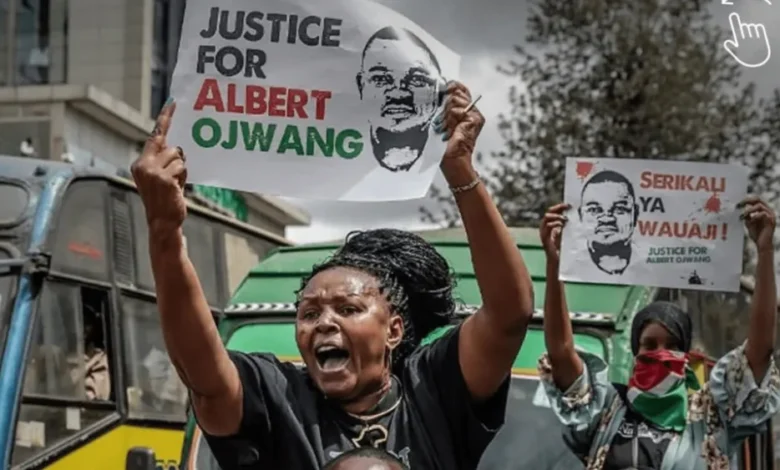
The response was swift and emotional. On Thursday, June 12, hundreds of demonstrators flooded the streets of downtown Nairobi, chanting slogans and waving Kenyan flags in a passionate demand for answers. The protests quickly turned chaotic, with rioters setting vehicles ablaze as police fired teargas to control the unrest. Eyewitness videos circulating online show widespread panic, as thick smoke filled the air and demonstrators clashed with riot police.

Among the chants that echoed through the capital was a growing call for the resignation of Inspector General of Police Japhet Koome Lagat, with protestors holding placards reading, “Lagat must go!”
Arrests and Rising Accountability
On Friday, June 13, the Independent Policing Oversight Authority (IPOA) confirmed the arrest of a senior police officer in connection with Ojwang’s death, following the earlier detention of a police constable on Thursday. IPOA’s move signals growing scrutiny over the conduct of law enforcement agencies, which have faced repeated accusations of extrajudicial killings, torture, and enforced disappearances in recent years.
In a statement, IPOA described the blogger’s case as “emblematic” of the need for urgent reforms and transparency within Kenya’s security services.
Ojwang’s wife, speaking tearfully to Reuters on Saturday, called for transparency and justice. “I deserve to know what happened to my husband,” she said, emphasizing the trauma the family continues to endure.
Human Rights Groups Demand Independent Probe
The reaction from civil society has been equally intense. Amnesty International and other advocacy organizations have accused the police of attempting a cover-up, pointing to Ojwang’s arrest being linked to his criticism of government policies on social media. The Kenya National Commission on Human Rights (KNCHR) also dismissed the police’s suicide claim as “implausible,” urging a fully independent investigation.
Amid public pressure, authorities have conducted an autopsy on the late blogger. While results are still pending, activists and supporters hope the findings will shed light on the exact cause of death.
Nairobi Paralyzed by Protests
The economic consequences of the unrest are becoming increasingly visible. Nairobi’s central business district experienced widespread disruptions, with businesses reporting losses and concerns growing about the impact on tourism. International media coverage has further amplified the unrest, casting a spotlight on Kenya’s volatile political climate and fragile trust in its institutions.
The current situation draws parallels to the 2024 anti-tax protests, during which dozens were killed in violent crackdowns. Those demonstrations revealed deep-rooted frustrations among citizens over governance failures, state violence, and widening inequality — grievances that Ojwang often highlighted in his commentary.
Government Yet to Respond Decisively
So far, the Kenyan government has offered minimal response. Interior Minister Kithure Kindiki has promised a thorough investigation into the incident, but no broader commitments to police reform have been made. Analysts warn that the administration risks further alienating the public if it fails to act decisively.
Ojwang’s death comes amid growing concern over attempts to control online expression, particularly after the government hinted at new regulations targeting digital platforms following last year’s protests. Many now see his death as not just a case of suspected police abuse, but a chilling sign of shrinking space for free speech in Kenya.

A Nation at a Crossroads
As the country awaits the outcome of the investigation, Ojwang’s case has become a potent symbol of resistance — a rallying cry for those demanding a more accountable, transparent, and humane justice system.
With the 2027 general elections on the horizon, pressure is mounting on the Kenyan government to take urgent steps to restore public trust, ensure justice for Ojwang, and address the broader issues of police misconduct and freedom of expression.
For now, Kenya stands at a critical crossroads — and the world is watching.
Stay with us for continued coverage on the unfolding situation in Nairobi and developments in the case of Albert Ojwang.