A staff member of Ecobank Nigeria, Solomon Ufayo, has been sentenced to one year in prison after pleading guilty to cyberfraud involving ₦2.4 million. The conviction was handed down by Justice Yellim Bogoro of the Federal High Court in Ikoyi, Lagos, on Monday, following Ufayo’s arraignment by the Economic and Financial Crimes Commission (EFCC) on May 16, 2025.
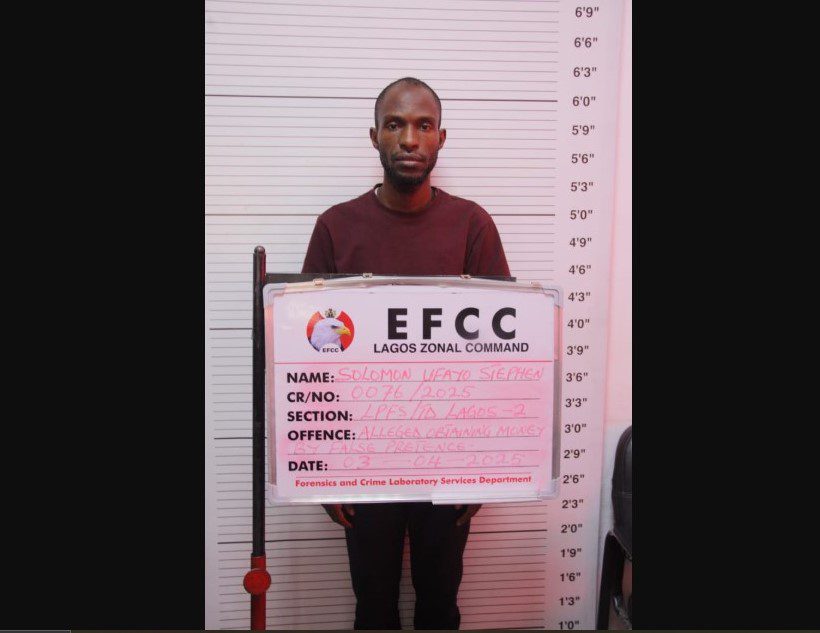
Inside the Cybercrime: How Ufayo Diverted Customer Funds
According to a statement from EFCC spokesperson Dele Oyewale, Ufayo, while working as a Relief Teller, fraudulently impersonated a bank customer, Ogunfodunrin Omowunmi Ajoke, and manipulated the customer’s account by falsifying deposit and withdrawal tellers. The illegal activity, which occurred between March 10 and 28, 2025, allowed Ufayo to divert ₦2,404,000 into his personal Opay account.
The EFCC charged that Ufayo’s actions were in clear violation of Section 22(2)(b)(i) of the Cybercrime (Prohibition, Prevention, etc.) Act, 2015, punishable under Section 22(2)(b) of the same law.
“The defendant fraudulently represented himself as the account holder and manipulated teller transactions to gain advantage for himself,” the EFCC explained.
Restitution, Plea for Mercy, and Sentencing
During court proceedings, Ufayo pleaded guilty. EFCC counsel, Abdulhamid Tukur, called operative David Gajere to present key evidence, including a voluntary confession, falsified teller slips, and a bank draft for full restitution of the stolen ₦2.4 million.

Before his sentencing, Ufayo pleaded for leniency, stating that financial hardship and family pressure led to his actions.
“I was tempted because my wife was pregnant. I was still in custody when she delivered. I have learnt my lesson,” he said.
Despite his plea, the judge convicted him and sentenced him to one year in prison with an option of a ₦500,000 fine. He was also ordered to undergo a two-week community service as part of his rehabilitation.
A Pattern Emerges: Growing Concerns About Insider Cyberfraud in Banks
This incident is part of a growing trend of cybercrime involving Nigerian bank employees. In May 2025, the EFCC arraigned four former Access Bank staff—Olajide Ogunmoroti, Michael Igbomina, David Onyeike, and Moses Iruolaje—over a ₦5.73 billion fraud. They allegedly exploited a server vulnerability to gain unauthorized access to customer accounts.
Similarly, three Wema Bank employees—Samuel Asiegbu, Fabian Onyeimachi, and Kingsley Kejim—alongside four others, were charged with manipulating data systems to orchestrate an ₦8.5 billion cyber heist earlier this year.

EFCC Raises Alarm: Bank Staff as Inside Informants for Global Hackers
EFCC Chairman, Ola Olukoyede, has raised concerns that some bank employees are collaborating with international hackers. He explained that these insiders provide critical access to bank systems, allowing hackers—often based in Eastern Europe or the U.S.—to remotely drain billions within seconds.
“These attacks are sophisticated, involving both local and global actors. Rogue employees play a key role by providing access,” Olukoyede stated.
The EFCC has since called for tighter internal controls, improved audit practices, and increased scrutiny of employee access to banking infrastructure.
Final Thoughts
While the conviction of Ufayo sends a strong message about the consequences of cybercrime, the wider trend of insider-led financial fraud highlights serious vulnerabilities within Nigerian banking institutions. Stakeholders, from management to regulators, must act urgently to restore trust, strengthen cyber defenses, and enforce accountability from the inside out.