Supreme Court Backs Trump-Era Immigration Policy, Allowing Expedited Deportations Without Additional Due Process

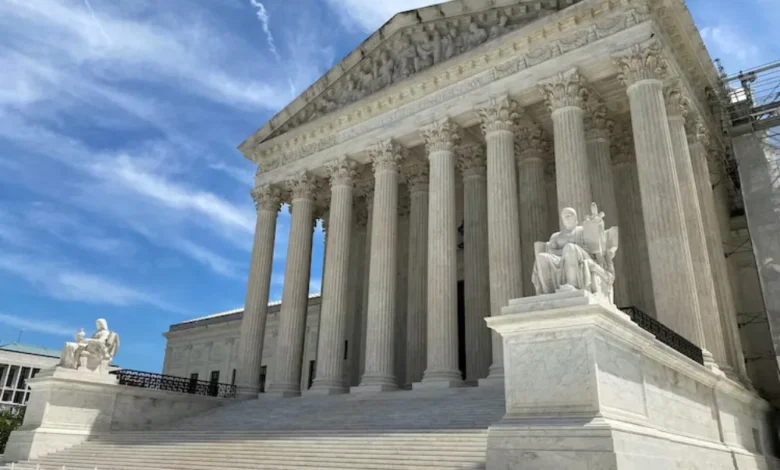
In a major legal win for former President Donald Trump’s immigration agenda, the U.S. Supreme Court’s conservative majority on Monday cleared the way for the federal government to resume expedited deportations of migrants to third countries—without requiring the additional due process safeguards imposed by a lower court.
The high court issued an unsigned order staying a district judge’s earlier injunction, which had mandated the government to provide detainees with advance notice of their destination, a minimum of 10 days to raise safety concerns, and at least 15 days to contest an adverse decision by immigration officers. That injunction stemmed from a lawsuit brought by a group of migrants facing deportation to South Sudan, who argued they were denied a fair opportunity to raise fears of torture or persecution.
Deportation Flights to Resume
The ruling effectively allows U.S. immigration officials to resume deportations to third countries, including El Salvador, Guatemala, South Sudan, and Libya, under a fast-track process that critics say offers little protection for vulnerable migrants.
While the litigation remains ongoing—and could take years to resolve—the Supreme Court’s order allows the Trump administration’s policies to be implemented in the meantime. Should the administration lose the broader legal challenge, the stay would be lifted, but for now, deportation flights can proceed.
Liberal Justices Dissent: “Lawless” and “Inexcusable”
In a strongly worded dissent, Justice Sonia Sotomayor, joined by Justices Elena Kagan and Ketanji Brown Jackson, blasted the decision as an “abuse of the Court’s equitable discretion,” accusing the majority of endorsing “lawlessness” in life-and-death matters.
“Apparently, the Court finds the idea that thousands will suffer violence in farflung locales more palatable than the remote possibility that a District Court exceeded its remedial powers,” Sotomayor wrote. “Respectfully, but regretfully, I dissent.”
She warned that the decision strips away “critical due process protections,” potentially exposing asylum seekers and other vulnerable individuals to serious harm or even death.
Background of the Case
The case began when a group of detainees, facing deportation to South Sudan, alleged they had been denied their constitutional rights. In response, U.S. District Judge Brian Murphy issued a preliminary injunction, halting deportations unless detainees received adequate notice and time to raise objections.
Advocacy groups argued these protections were essential to prevent deporting people into torture or dangerous conflict zones, and asked the Supreme Court to keep the injunction in place during the appeal process.
The Trump-era policy revives controversial practices, including removals to third countries, rather than to a migrant’s country of origin or citizenship—often done through agreements or informal arrangements with countries in conflict.
DHS Celebrates Ruling
The Department of Homeland Security (DHS) quickly welcomed the Supreme Court’s ruling.
“MAJOR win for the safety and security of the American people,” DHS spokeswoman Tricia McLaughlin posted on X (formerly Twitter). “Fire up the deportation planes.”
Administration officials had previously argued the district court’s requirements were “onerous, unrealistic, and legally unfounded”, claiming they would burden immigration enforcement and delay removals.
Advocates Respond: “Horrifying” Consequences
Immigrant rights groups condemned the decision, vowing to continue legal battles to restore protections.
“The ramifications of the Supreme Court’s order will be horrifying,” said Trina Realmuto, Executive Director of the National Immigration Litigation Alliance. “It strips away critical due process protections that have been protecting our class members from torture and death.”
Realmuto emphasized that the ruling applies only to the interim stage of litigation and said efforts are underway to accelerate the final decision.
What’s Next?
While the Supreme Court had previously affirmed in a separate ruling that migrants facing deportation are entitled to some level of due process, it has not yet fully defined what that entails in expedited removal cases. This leaves immigration officials with broad discretion—at least for now.
Congress and the courts remain divided over how far the executive branch can go in enforcing immigration laws without legislative or judicial oversight. Monday’s ruling could set the tone for expanded deportation powers and reduced procedural protections in the months to come, especially if political winds shift in favor of stricter enforcement.
As the case continues through the appellate system, the future of human rights protections for deportees may hang in the balance.