Yahoo Bets on AI to Revive Its Email Platform — But Is It Enough to Reclaim Its Past Glory?


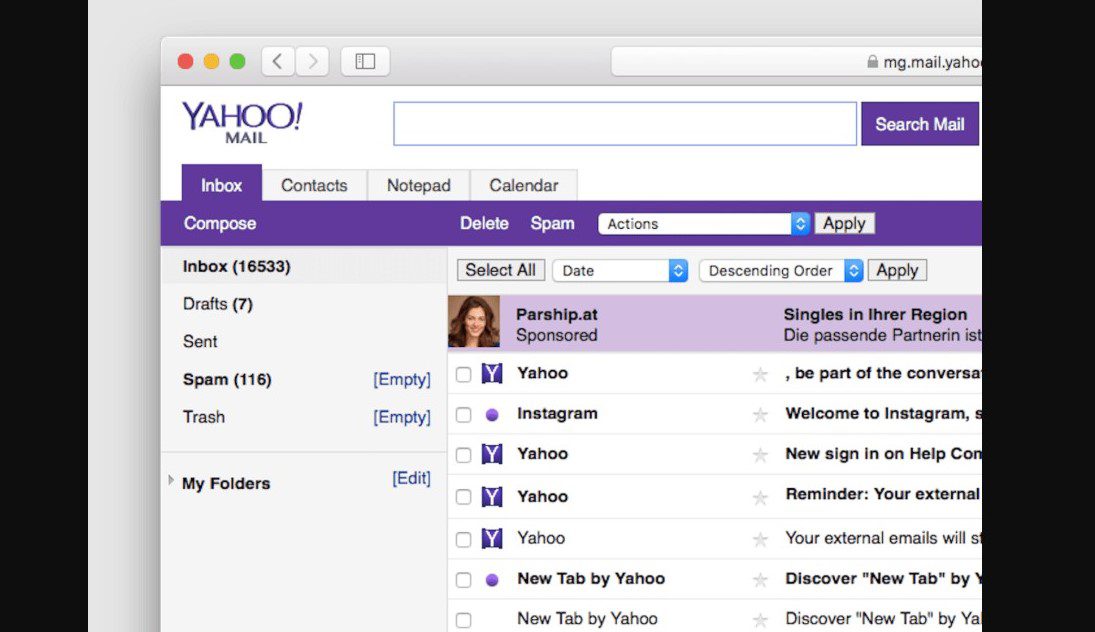
After years of playing catch-up in the ever-evolving tech industry, Yahoo has announced a bold new step: integrating artificial intelligence into Yahoo Mail. This marks the company’s first major email upgrade in over a decade, aiming to improve user experience by making inbox management smarter, faster, and more intuitive.
At the core of the update is the “Catch Up” feature, which provides AI-generated email summaries and previews. The goal? Help users quickly scan through their inbox, understand messages without opening them, and decide what to delete or keep—all in one glance.
Yahoo says the feature is especially designed with Gen Z and millennials in mind, a demographic that now makes up nearly half of its email user base. But as promising as this development sounds, it raises a bigger question: Can AI-powered email features help Yahoo reclaim relevance in a market dominated by Gmail, Outlook, and modern communication platforms like Slack and WhatsApp?
The Long Road: Yahoo’s Rise, Fall, and Reinvention
Yahoo’s journey from Silicon Valley superstar to tech underdog is as dramatic as it gets.
Founded in 1994 by Jerry Yang and David Filo, Yahoo was once a pioneer of the internet age. Its suite of products—including Yahoo Mail, Yahoo News, and Yahoo Messenger—made it the ultimate web portal of the early 2000s. At its peak, Yahoo was valued at $125 billion.
But a series of strategic blunders led to a painful decline:
-
Missed opportunities: Yahoo passed on buying Google in 2004 for $5 billion and failed to fully capitalize on its early investment in Alibaba.
-
Fierce competition: As social media exploded, platforms like Facebook and Twitter pulled users—and advertising dollars—away.
-
Leadership instability: The company cycled through CEOs without a cohesive long-term vision.
-
Massive data breaches: Between 2010 and 2014, Yahoo suffered multiple breaches that compromised over 3 billion user accounts, damaging its credibility.
-
Product discontinuation: In 2018, Yahoo shut down Yahoo Messenger after two decades due to dwindling usage and competition from apps like WhatsApp and Snapchat.
In 2017, Verizon acquired Yahoo’s core internet business for $4.48 billion. Then in 2021, Apollo Global Management bought Verizon’s media assets, including Yahoo, for $5 billion—signaling another chapter of rebranding and restructuring.

The AI Email Makeover: A Step Toward Relevance?
Now, Yahoo is attempting to revitalize one of its most enduring products—Mail—through artificial intelligence. The new Catch Up feature summarizes emails, giving users a clear snapshot of their inbox without having to open every message. This is part of a broader shift in Yahoo’s product focus, which now centers around Mail, Finance, and Sports.
According to Yahoo CEO Jim Lanzone, who took the helm in 2021, email isn’t dead—it’s evolving.
“People have been writing off or predicting the death of e-mail for years, but it has an incredibly consistent role in people’s lives, both at home and work,” Lanzone said.
He noted that one in three Americans still uses Yahoo Mail, with a significant portion of those users under 40. For Yahoo, that’s a sign the platform remains relevant—and worth investing in.
The company’s strategy is to embed AI without requiring users to change their habits. As Lanzone put it, “We don’t want to ask people to take an extra step or learn a new behavior.” Instead, the AI features are meant to make everyday tasks simpler and more efficient.
Can AI Be Yahoo’s Comeback Story?
Yahoo’s move to integrate AI is commendable and likely to improve user experience—but whether it can restore the company to its former glory is a different story.
Yes, the new AI tools are a positive step, and they show Yahoo is paying attention to modern digital habits and expectations. But Yahoo’s downfall wasn’t due to outdated email features alone. It was the result of years of missed opportunities, eroding user trust, poor leadership decisions, and fierce market competition.
Also, email itself is no longer the central communication tool it once was. Modern users, especially Gen Z, are more engaged on platforms like WhatsApp, Instagram, Discord, and Slack. In fact, a recent report found that 93% of African users prefer WhatsApp over email for work-related communication.
The Verdict: One Small Step in a Long Journey
Yahoo’s AI-powered email update isn’t a silver bullet, but it does suggest the company is serious about evolving. In a crowded digital ecosystem, every improvement counts—especially one that addresses convenience and time-saving.
If Yahoo continues to push AI across its core products and finds ways to rebuild trust, relevance, and functionality, it may just earn its place again—not necessarily as a tech titan, but as a dependable platform that adapts with the times.
The battle for inbox dominance isn’t over, but for Yahoo, this could be the fresh start it’s been searching for.
Bottom Line: Yahoo’s new AI email feature is a smart move in a smarter age. Whether it’s enough to turn the company’s fortunes around is uncertain—but for now, it’s a step in the right direction.


