Senate Republicans on Wednesday moved forward with an immigration enforcement funding package that had stalled before the Memorial Day recess amid concerns over President Donald Trump’s proposed “anti-weaponization fund.”
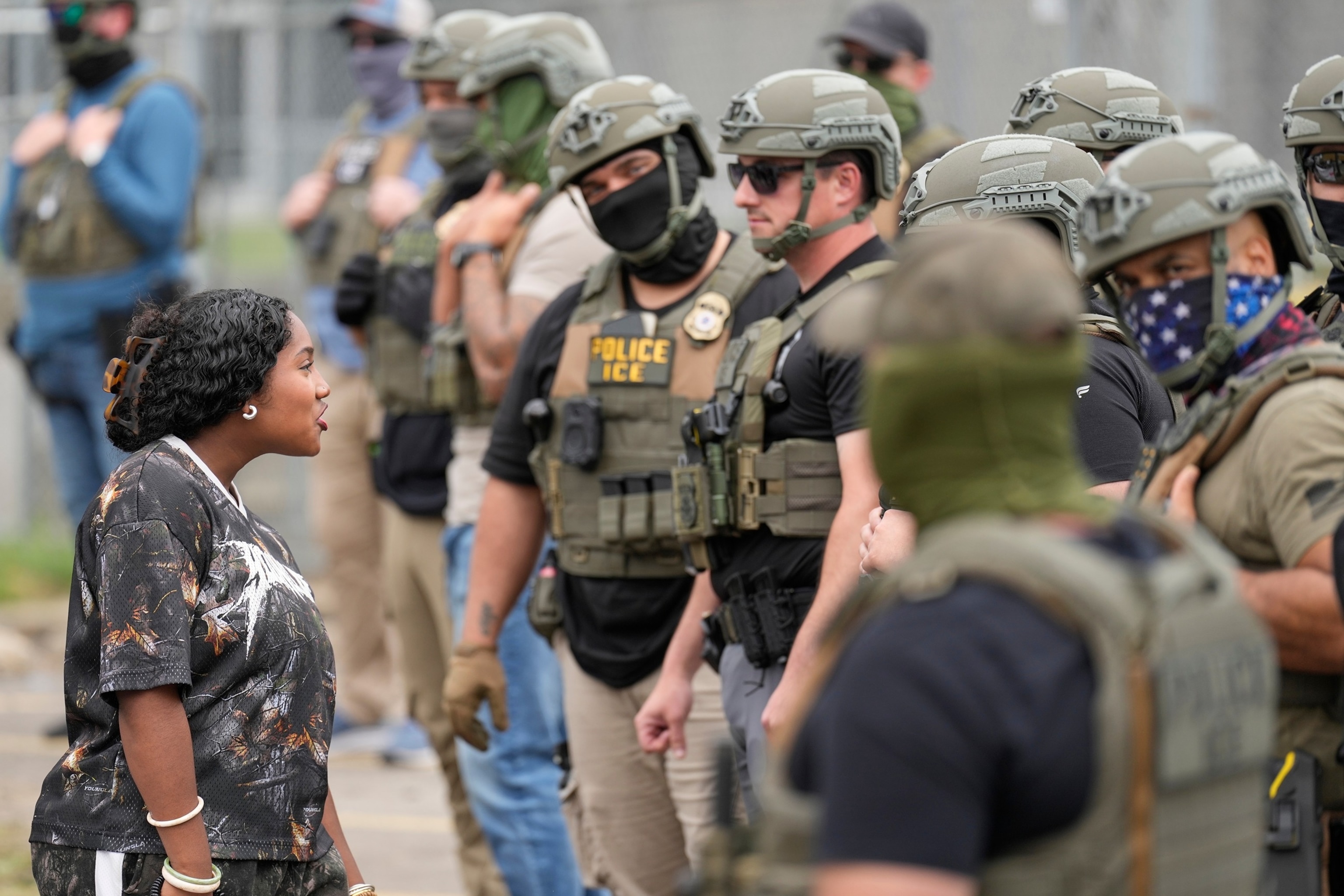
In a party-line procedural vote, senators advanced legislation that would allocate billions of dollars to Immigration and Customs Enforcement (ICE) and Customs and Border Protection (CBP). The vote triggered up to 20 hours of debate, followed by an expected late-night “vote-a-rama” featuring a marathon of amendment votes.
The breakthrough came after Acting Attorney General Todd Blanche told a House subcommittee on Tuesday that the administration was “not moving forward with the fund. Period.” Senate Republican leaders said the public testimony was sufficient to ease lingering concerns within the conference.
“I think that most of our members feel pretty satisfied with his comments, that they were made in a public hearing under oath,” Senate Majority Leader John Thune told reporters Wednesday. “His comments were extremely helpful.”
The fund — totaling roughly $1.8 billion — had been created by the Justice Department to compensate individuals who claim they were improperly targeted during the Biden administration. Its existence sparked a rare internal revolt among Republicans during a closed-door meeting with Blanche two weeks ago, where frustrated senators warned they would withhold support for the immigration package unless the fund’s scope and beneficiaries were clearly defined.
Those talks failed to produce an immediate resolution, prompting Thune to dismiss senators early for the Memorial Day recess to allow negotiations to continue.
While the bill’s advancement signals growing confidence among GOP leaders that it can pass under reconciliation rules — which require only a simple majority — several obstacles remain. During the vote-a-rama, Democrats are expected to offer politically sensitive amendments, including proposals to permanently eliminate or sharply restrict the anti-weaponization fund. Some of those amendments could attract Republican support.
Skepticism also persists among a small group of Republicans who want a written commitment from the Justice Department that the fund will never be revived. During Tuesday’s hearing, Blanche declined to provide such a guarantee in writing, saying only that he would “take it under advisement.”
Retiring Republican Sen. Thom Tillis said he plans to introduce his own amendment to permanently bar the fund. “Even DOJ knows this was a bad idea,” Tillis said. “We need finality so the question can’t be reopened in the future.”
The debate comes as senators have already removed another White House request from the package — a $1 billion proposal for security upgrades tied to a White House East Wing renovation, including funding for a proposed ballroom. The Senate parliamentarian ruled the request out of order under reconciliation rules, and several Republicans had publicly opposed it.
Even so, Democrats are expected to offer amendments explicitly prohibiting funding for the ballroom project.
If any amendments are adopted, the bill will be revised before a final Senate vote and then sent to the House. If approved there, it would head to Trump’s desk.
Congress has already funded the remainder of the Department of Homeland Security’s budget. Funding for ICE and CBP was separated during earlier negotiations tied to immigration enforcement reforms and efforts to end a historic partial government shutdown.