Tragedy in Idaho: Firefighters Ambushed While Battling Blaze, Gunman Identified as Wess Roley

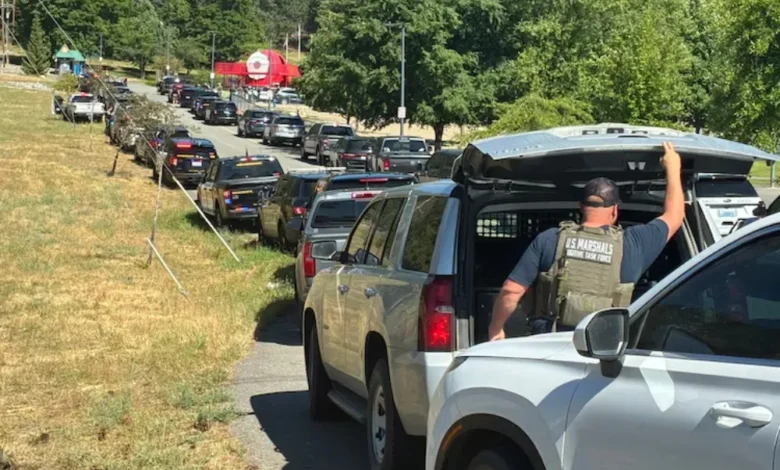
In a shocking and devastating incident, two firefighters were killed and another injured after being ambushed by gunfire while responding to a brush fire in Coeur d’Alene, Idaho, on Sunday. The suspected gunman, now identified as 57-year-old Wess Roley, was later found dead following an hours-long manhunt.
The Incident Unfolds
Authorities say the deadly ambush occurred on Canfield Mountain, where firefighters from the Coeur d’Alene and Kootenai County Fire Departments were called to contain a brush fire. According to Kootenai County Sheriff Robert Norris, the first emergency call reporting the fire came in at 1:21 p.m. By 2 p.m., first responders on the scene reported they were under gunfire.
Sheriff Norris confirmed during a press briefing that the two fatalities were fire personnel—one from each responding department. A third firefighter sustained a gunshot wound and was transported to Kootenai Health Hospital, where they are currently receiving treatment.
“This was a total ambush. These firefighters did not have a chance,” said Sheriff Norris, who described the attack as premeditated and deliberate.

Manhunt and Suspect’s Death
An estimated 300 law enforcement officers from local, state, and federal agencies descended on the area as the situation unfolded. Officers engaged in gunfire exchanges with the suspect and issued a “neutralize” order around 6:30 p.m.
At 7:40 p.m., SWAT teams located a deceased male on Canfield Mountain near the fire’s edge. A firearm was recovered close to the body. Law enforcement identified the man as Wess Roley, who they believe intentionally started the brush fire to lure emergency personnel into a deadly trap.
Based on forensic evidence and the trajectory of the gunfire, officials have stated they are confident Roley acted alone. The Bureau of Alcohol, Tobacco, Firearms and Explosives (ATF) has now begun tracing the weapon used in the ambush.
Aftermath and Investigation
The shelter-in-place order issued for the Canfield Mountain Trailhead and surrounding neighborhoods has since been lifted. However, residents are being urged to remain alert due to the ongoing risk from the wildfire, which is still being contained.
Authorities said the suspect’s body was recovered before the fire reached the area where he was located. Law enforcement is continuing their investigation with support from the FBI and the Department of Homeland Security.

National Response
The horrific nature of the attack has drawn national attention and condemnation.
Idaho Governor Brad Little called the incident a “heinous direct assault on our brave firefighters,” urging residents to “pray for them and their families.” On social media platform X, formerly Twitter, he wrote:
“Multiple heroic firefighters were attacked today while responding to a fire in North Idaho. I ask all Idahoans to pray for them and their families as we wait to learn more.”
Department of Homeland Security Secretary Kristi Noem has been briefed on the situation, and offers of assistance have been extended from the White House and FBI Director Kash Patel.
Community in Mourning
As investigations continue, the Coeur d’Alene and Kootenai County communities are left reeling from the tragedy. Vigils and memorials are expected in the coming days to honor the fallen firefighters, whose names have not yet been released pending notification of next of kin.
Authorities are expected to release more information as it becomes available, and residents are advised to stay updated through official channels.