Lagos to Launch Africa’s First Subnational Carbon Exchange, Projected to Generate $1 Billion in 15 Years

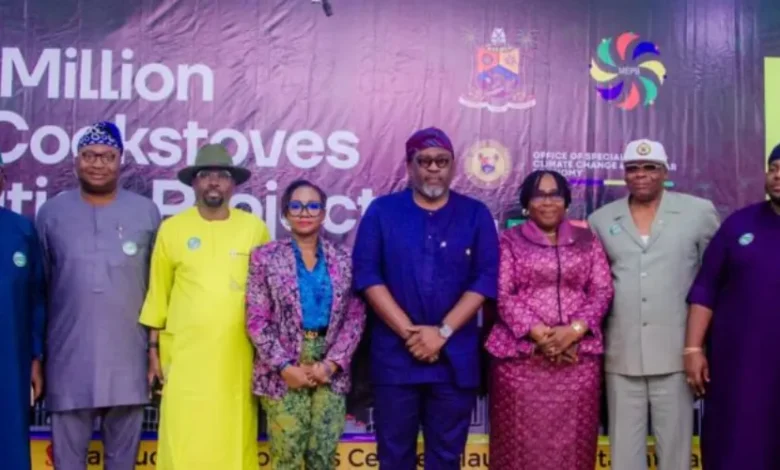
Lagos State is poised to make history with the launch of Africa’s first subnational carbon exchange, a bold step in climate finance that is expected to generate over $1 billion in revenue from the trading of 1.2 million carbon credits over the next 15 years.
The announcement was made by Titi Oshodi, Special Adviser to Governor Babajide Sanwo-Olu on Climate Change and Circular Economy, during the unveiling of the ambitious “80 Million Credit Float Project” held at the Bagauda Kaltho Press Centre in Alausa. The initiative is part of a broader climate action strategy aimed at transforming Lagos into a hub of green innovation and sustainable development.
According to Oshodi, the Lagos Carbon Exchange (LCX) will serve as a platform for monetizing emissions reductions through the certification and trading of carbon credits. This move not only places Lagos at the forefront of environmental finance in Africa, but also signals a shift in how local governments can leverage green policies to unlock new revenue streams and social impact.
“The initiative will generate 1.2 million carbon credits, bringing in over $1 billion in revenue over 15 years to support infrastructure, social programmes, and climate projects,” Oshodi said, reaffirming the state’s commitment to climate resilience and equitable development.
A Holistic Approach to Climate Action
The LCX is a central pillar of the newly launched “80 Million Credit Float Project,” a wide-ranging climate finance and social intervention programme implemented in collaboration with GreenPlinth Africa. The project seeks to disburse 80 million eco-loans and create an estimated 35 million green jobs across Nigeria, signaling Lagos’ intention to influence climate policy far beyond its borders.
Commissioner for Economic Planning and Budget, Ope George, highlighted that the initiative is firmly aligned with the state’s THEMES Plus Agenda. He emphasized that it will act as an economic catalyst, especially in areas such as public health and clean energy. “This is more than just an environmental initiative — it is a developmental strategy that will help reduce indoor air pollution and improve health outcomes, particularly for women and children,” he said.
Clean Energy for the People
As part of the first phase of implementation, Lagos will commence the free distribution of six million clean cookstoves starting in June 2025, with the pilot rollout in the Makoko community. This initiative is designed to reduce reliance on firewood and kerosene, providing residents with access to cleaner and safer cooking alternatives.
Complementing this effort is a “Pay-to-Cook” scheme, which will reward households with ₦10,000 annually for adopting clean cooking practices. Beneficiaries will also receive free health insurance coverage, and small businesses will be supported through renewable energy grants. In addition, Lagos plans to establish free food stores to help vulnerable communities navigate economic hardship while promoting sustainable practices.
Investing in a Green Future
To drive development at the grassroots level, the project will allocate ₦1 billion annually to all 57 local councils in Lagos State for green development projects. This funding will support the execution of five sustainable initiatives in each of 1,000 communities every year. The government also aims to plant 400 million economic trees as part of its long-term plan to combat deforestation and food insecurity.
A National Model for Climate Governance
Governance of the project is being overseen by a high-level Project Advisory Board chaired by Governor Babajide Sanwo-Olu. Governor Mohammed Umar Bago of Niger State serves as the Deputy Chairman. The board also includes representatives from Nigeria’s six geopolitical zones, private sector stakeholders, NGOs, and international development partners — ensuring broad-based participation and accountability.
The launch of the Lagos Carbon Exchange and the wider “80 Million Credit Float Project” sets a powerful precedent for other subnational governments across Africa. It demonstrates how cities and states can play a central role in driving the continent’s green economy while delivering tangible benefits to their citizens.
With this groundbreaking initiative, Lagos is not only leading Nigeria’s climate transition but is also establishing itself as a beacon of sustainable development in Africa.