Nigeria Condemns Israel’s Airstrikes on Iran, Calls for Immediate Ceasefire and UN Action

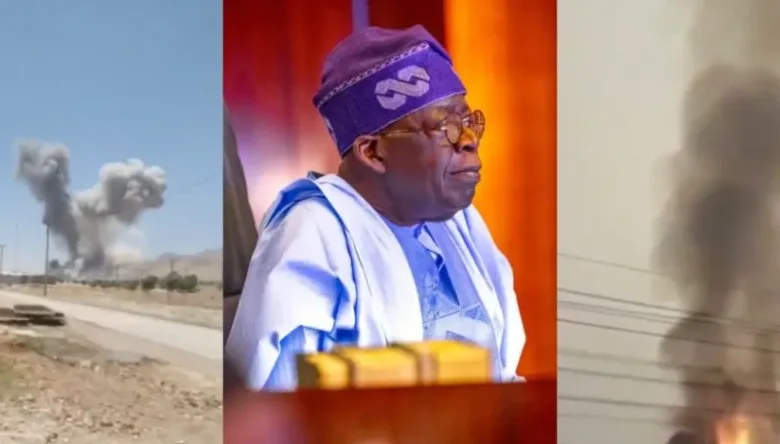
The Federal Government of Nigeria has officially condemned the recent Israeli airstrikes on Iran, describing them as a dangerous and destabilizing escalation that poses a serious threat to peace and security in the Middle East.
In a statement released on Saturday, the Ministry of Foreign Affairs—through its spokesperson, Kimiebi Ebienfa—voiced Nigeria’s “grave concern” over the deepening hostilities between Israel and Iran, marked by an alarming exchange of retaliatory missile and aerial attacks in recent days.
“Escalation Threatens Global Peace”
“The Government of the Federal Republic of Nigeria condemns Israel’s preemptive strike on Iran that has led to an escalation of hostilities,” the statement read. “Nigeria expresses its grave concern and calls for an immediate cessation of hostilities.”
The Nigerian government warned that the continued violence between the two regional powers could plunge the Middle East into wider conflict, drawing in neighboring countries and threatening global peace, stability, and economic security.
Retaliation Raises the Stakes
Nigeria’s condemnation comes amid a spiral of military aggression between the two nations. The latest airstrikes by Israel reportedly hit over 100 strategic targets inside Iran, including military and nuclear facilities. The assault is believed to have killed several high-ranking Iranian military officials, including General Mohammad Bagheri, Chief of Staff of the Iranian Armed Forces, and Hossein Salami, commander of the Islamic Revolutionary Guard Corps (IRGC).
In response, Iran’s Supreme Leader, Ayatollah Ali Khamenei, declared the strike a “declaration of war,” vowing that Israel would face a “bitter and painful” retaliation. Iranian military officials have since promised an aggressive response, warning that there will be “no limits” to their countermeasures—an escalation which, according to Nigeria, must be urgently halted.
“The Path to Peace Lies in Dialogue”
Reaffirming its commitment to peaceful conflict resolution, Nigeria emphasized that the ongoing cycle of violence places millions of civilian lives at risk while increasing the chances of a broader regional war.
“The continued cycle of retaliation not only endangers civilian lives but threatens to plunge the broader Middle East into further instability,” the statement said. “Military action is not a substitute for negotiation. The path to lasting peace lies in diplomacy.”
Nigeria called on both nations to show maximum restraint and return to the negotiating table, urging all stakeholders to prioritize diplomacy, mutual respect, and adherence to international law over the use of force.
Call for UN Security Council Intervention
Amid rising international concern, Nigeria appealed to the United Nations Security Council and the broader international community to take swift and decisive action to de-escalate the situation.
“Nigeria urges the UN Security Council to act swiftly in promoting peace and providing a space for meaningful engagement between the parties involved,” the Foreign Affairs Ministry added.
The statement also reaffirmed Nigeria’s readiness to support any credible efforts or multilateral initiatives aimed at restoring calm and rebuilding trust in the region.
A Broader Crisis in the Making
The Israeli-Iranian conflict has intensified over the years, driven by long-standing geopolitical tensions, military rivalries, and proxy confrontations throughout the Middle East. However, this latest exchange marks one of the most dangerous escalations in recent memory, with direct strikes and high-profile casualties raising the possibility of a full-blown war.
Nigeria’s public condemnation adds to a growing chorus of international voices calling for urgent intervention and de-escalation. As a prominent African nation with a long history of advocating for peace and multilateral diplomacy, Nigeria’s stance reinforces the importance of global cooperation in times of crisis.
Conclusion
With the world watching closely, the next steps taken by Israel, Iran, and the international community will be critical in determining whether this conflict spirals further—or whether a window for peace can still be opened. For now, Nigeria has made its position clear: violence must give way to diplomacy, and peace must remain the priority.