An Israeli airstrike on Tehran’s notorious Evin Prison on June 23 killed at least 71 people, according to Iran’s judiciary spokesperson, sparking outrage from international human rights advocates and deepening concerns about the escalation of the Iran-Israel conflict.
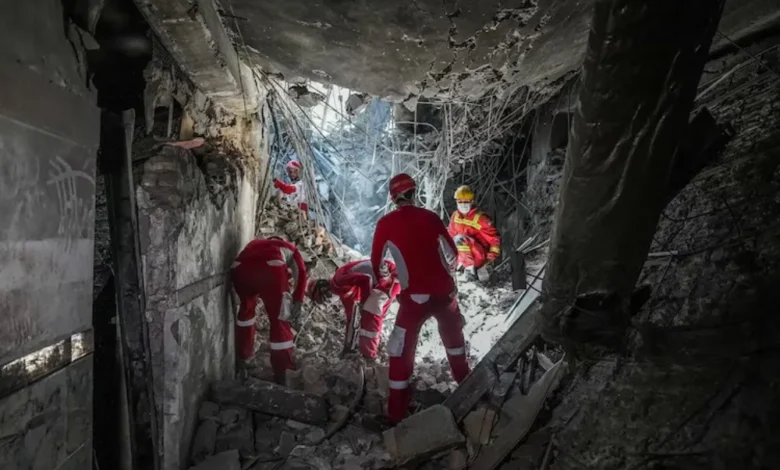
The death toll, confirmed by Asghar Jahangir and reported by Iran’s semi-official ISNA News Agency, includes prison staff, military conscripts, inmates, visiting family members, and civilians living near the complex. Images released by Iran’s Mizan News Agency show rescuers digging through piles of rubble inside the devastated prison grounds.
A Strike on the Heart of Tehran
The attack was part of a broader wave of Israeli strikes aimed at what Israeli Defense Minister Israel Katz described as “regime targets and government bodies in the heart of Tehran.” Evin Prison — long infamous for housing political prisoners, activists, and dissidents — was among the most controversial sites hit.
While Israeli officials have defended the operation as “targeted,” claiming it was carried out with “maximum precision to avoid harming uninvolved civilians,” evidence from Iranian sources and international observers paints a different picture.
Civilian Casualties and International Outcry
Nobel Peace Prize laureate and jailed Iranian activist Narges Mohammadi, who is imprisoned in Evin herself, called the bombing “undoubtedly a clear example of a war crime.” Her statement, smuggled out via her legal team, accused Israel of “targeting civilians under the guise of military action.”
The United Nations Human Rights Office also weighed in, with spokesperson Thameen Al-Kheetan stating that “Evin is not a military objective, and targeting it constitutes a grave breach of international humanitarian law.”
Family members of prisoners have expressed alarm, with many still uncertain about the fate of their loved ones. Numerous unverified reports from Iranian state and local media claim that civilians and detainees were among the dead and injured. The chaos has only deepened after accounts of surviving inmates being hastily transferred to other prisons across Tehran, further complicating communication and visitation.
The Human Cost
One woman, whose husband has been held in Evin since 2023 for political activism, told local Iranian media that she hasn’t received any information about his whereabouts since the night of the airstrike. “They told me he was alive. Then they said he had been moved. Now, they don’t answer our calls at all,” she said tearfully outside the gates of a nearby detention facility.
For many Iranians, Evin symbolizes decades of political repression — but it also houses non-violent prisoners, including journalists, protesters, and dual nationals. The airstrike has only added to their suffering, leaving families traumatized and the nation further polarized.
Rising Tensions and Legal Questions
The targeting of a civilian prison by a state actor raises serious questions under international law. Under the Geneva Conventions, the deliberate targeting of non-military infrastructure or the disproportionate use of force in densely populated areas may amount to war crimes.
Human rights organizations are now calling for independent investigations and potential sanctions. Amnesty International issued a statement demanding that “all parties to the conflict uphold their obligations under international humanitarian law.”
While Israel has not officially commented beyond its original statement of strategic intent, defense sources told regional media that the prison was believed to be a “command and communications node” for Iran’s Islamic Revolutionary Guard Corps (IRGC) during the recent military conflict.
What Happens Next
As Iran mourns the loss of dozens at Evin and the international community watches with unease, pressure is building for clarity, accountability, and restraint. The death toll from the broader Iran-Israel conflict now stands in the hundreds, with no clear end in sight.
Activists say the Evin attack could mark a dangerous new phase in the war — one in which civilian institutions become military targets under contested justification.
“This is more than just an airstrike,” said a Tehran-based human rights lawyer speaking anonymously for safety reasons. “It’s a warning that no place — not even a prison — is off-limits anymore.”
For the families waiting outside prison walls, however, the political justifications offer little comfort. Their only hope is to receive news — any news — that their loved ones are alive.