Africa’s Blockchain Boom: Outpacing Global Growth and Solving Real-World Problems

June 2025
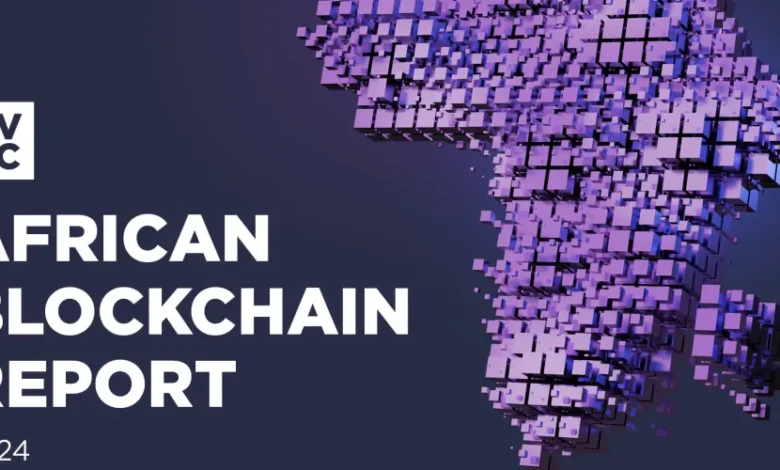
Africa is no longer a quiet participant in the global blockchain race—it is quickly becoming one of its most compelling stories. According to the fourth edition of the African Blockchain Report, published by CV VC in collaboration with Absa Group, Africa’s blockchain ecosystem experienced a 15% year-on-year increase in deal activity in 2024, significantly outpacing the global average of 6%.

While global blockchain funding rose by 14%, Africa’s share of venture capital (VC) deals climbed to 2.3%, led primarily by Nigeria’s momentum and a wave of innovation tackling problems in finance, agriculture, and identity management.
Nigeria Leads the Pack: Blockchain Built on Necessity
Nigeria remains the undisputed leader in Africa’s blockchain landscape, capturing 33% of all blockchain deals on the continent in 2024. Nigerian startups are gaining investor confidence by focusing on remittances, cross-border payments, and financial inclusion—critical areas where traditional systems often fail.

Despite a 36% decline in total investment to $122.5 million, Nigeria stood out with a median deal size of $2.8 million, which is twice the median across all sectors.
“Nigeria’s blockchain ecosystem is thriving because it addresses real pain points like inefficient remittances and financial exclusion,” said Jarryd Kennedy, Head of Investments at CV VC Africa.
Fueling this growth is a strong developer community, with Nigeria accounting for 3% of global blockchain developers—over 300,000 active contributors.
Beyond Crypto: Agriculture, Identity & Real-World Use Cases
Blockchain adoption in Africa is not limited to crypto trading or DeFi. Its most transformative impact may lie in agriculture, a sector that employs over 60% of the continent’s workforce but suffers from weak supply chains and poor export traceability.
Companies like Shamba Records are solving these issues using on-chain farmer identity and crop data, which improve transparency and connect smallholder farmers to global markets.
“Africa isn’t testing blockchain; it’s embedding it where it matters most for the future of humanity,” said George Maina, CEO of Shamba Records.
One compelling example is Mary Wanjiku, a Kenyan farmer who now uses blockchain to certify her coffee’s ethical sourcing. Her access to premium buyers and carbon credits worth $300 annually has allowed her to send her daughters to school—breaking the cycle of poverty.
Blockchain is also solving long-standing challenges like land ownership disputes. In Nigeria, HouseAfrica is using blockchain to digitally validate property ownership, reducing fraud in a country still heavily reliant on paper-based records.
Regulation: From Caution to Collaboration
The regulatory landscape is slowly evolving. Seven African countries now have clear digital asset regulations, and 35 others are developing frameworks, reflecting a shift toward innovation.

Nigeria’s December 2023 reversal of its crypto ban and the introduction of new draft guidelines in March 2024 were seen as pivotal steps. These reforms have helped build a more stable environment for startups and investors alike.
Still, 47 out of 54 African countries lack clear policies, creating uncertainties that hamper scale.
“This isn’t just an investment gap; it’s an opportunity gap,” said Mathias Ruch, CEO of CV VC, pointing out that Africa still captured only 1% of global blockchain funding in 2024, down from 1.8%.
Key Market Trends Across Africa’s Blockchain Space
The CV VC report highlighted several regional standouts:
-
Nigeria: Leading with 33% of deal activity, especially in payment infrastructure. Notable raise: Zone Payment Network’s $8.5M.
-
Kenya: Accounted for 13% of deals, with a strong focus on decentralised finance (DeFi) and data analytics.
-
South Africa: Claimed 18% of total funding, aided by regulatory clarity and established firms.
-
Pan-African platforms: Represented 28.4% of funding, reflecting growing demand for cross-border, scalable solutions.
Most funding rounds were seed-stage, with centralised financial services dominating at 40.5% of all capital raised, showing investor preference for core infrastructure.

Infrastructure & Inclusion: A Mobile-First Advantage
Despite challenges—such as unreliable internet, limited regulatory support, and cybersecurity concerns—Africa’s fundamentals are promising:
-
Mobile penetration has surpassed 80%, providing a solid foundation for decentralised mobile-first services.
-
With 600 million unbanked adults on the continent, blockchain offers an accessible and affordable alternative to traditional banking.
-
By 2050, Africa will host 25% of the world’s population, with 9 of the 20 fastest-growing economies—a demographic shift that makes it fertile ground for digital transformation.
The Path Forward: Blockchain as a Development Tool
“African innovators are solving deeply rooted challenges with blockchain, from trade bottlenecks to agricultural transformation,” said Rob Downes, Head of Digital Assets at Absa CIB, which co-authored the report.
The takeaway? Blockchain in Africa is not about hype—it’s about solving real problems. From enhancing farmer incomes to fixing broken identity systems, the technology is becoming integral to the continent’s digital economy.
The CV VC African Blockchain Report is a wake-up call for global investors. Africa isn’t just catching up; it’s redefining the blockchain narrative—on its own terms, and for its own future.
Also Read:


