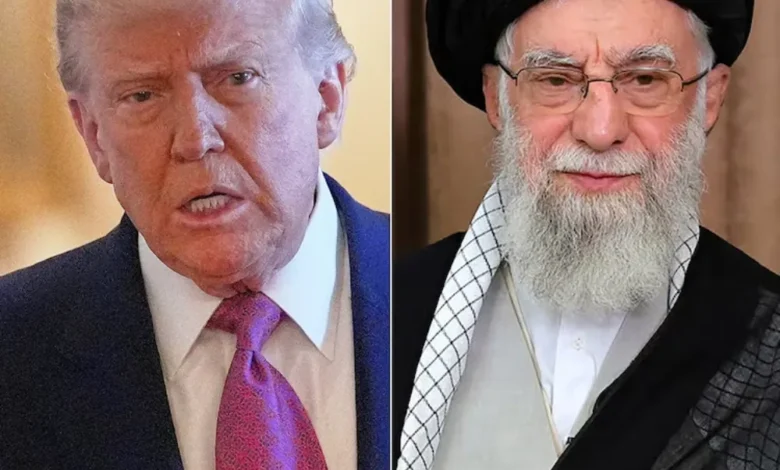
In a development that adds a new layer of intrigue to the already tense Middle East crisis, President Donald Trump reportedly rejected a recent Israeli proposal to assassinate Iran’s Supreme Leader, Ayatollah Ali Khamenei, according to two U.S. officials who spoke with ABC News.
The officials revealed that Israel had informed the United States it had a rare and immediate “window of opportunity” to carry out the high-profile strike against Iran’s top religious and political figure. However, President Trump declined to support the operation, effectively halting the controversial plan.
A Decisive Rebuff in a Delicate Moment
While the exact reasoning behind Trump’s rejection remains undisclosed, the refusal marks a pivotal moment in U.S.-Israel relations as well as in the ongoing confrontation between Israel and Iran, which has recently escalated with military strikes and threats of retaliation.
The officials did not confirm whether Trump communicated his decision directly to Israeli Prime Minister Benjamin Netanyahu, or if the response was delivered through diplomatic or military channels.
Netanyahu Dodges Questions, White House Remains Silent
The report, which was first broken by Reuters, was raised during a Sunday interview with Netanyahu on Fox News. When pressed for confirmation, the Israeli Prime Minister sidestepped the question, offering only a vague response.
“There are so many false reports of conversations that never happened, and I’m not going to get into that,” Netanyahu said. “But I can tell you, I think we’ll do what we need to do, and the United States knows what is good for the United States.”
“I’m just not going to get into it all,” he added, refusing to verify or deny the assassination plan.
Meanwhile, the White House has declined to comment on the report, neither confirming nor denying the claims made by the unnamed U.S. officials.
Strategic Calculations Amid Rising Tensions
This revelation comes at a time of escalating hostilities between Israel and Iran. Following Israel’s recent massive airstrike campaign targeting more than 100 sites within Iran—including military and nuclear facilities—Iran has vowed harsh retaliation.
The killing of senior Iranian military leaders in that offensive, including General Mohammad Bagheri and IRGC commander Hossein Salami, has dramatically intensified regional instability. Iran’s Supreme Leader has since declared the attack a “declaration of war”, further raising international concern over the potential for a wider conflict.
Had the alleged plan to assassinate Khamenei been approved and executed, it could have triggered severe and immediate military escalation, possibly plunging the Middle East into a full-scale war.
Why Trump May Have Said “No”
While Trump has taken a hardline stance against Iran during his presidency, particularly over its nuclear ambitions and support for militant groups, his decision to reject the assassination proposal may reflect a broader strategy aimed at preventing all-out war.
By declining the Israeli plan, Trump may be signaling a preference for containment and diplomacy over risky unilateral strikes that could destabilize the region and drag the U.S. into direct conflict.
At the same time, the move also reaffirms Trump’s willingness to maintain strategic independence from key allies like Israel when U.S. interests are at stake.
What Comes Next?
With the situation between Israel and Iran still extremely volatile, this new detail underscores the high-stakes decision-making unfolding behind the scenes in Washington and Tel Aviv. The revelation that such a plan was even considered shows just how close the region may have come to a historic and dangerous escalation.
As both countries prepare for what could be more military and diplomatic showdowns, all eyes will remain on how the U.S. balances its alliance with Israel, its stance on Iran, and its own long-term security interests in the region.