Abuja, July 22, 2025
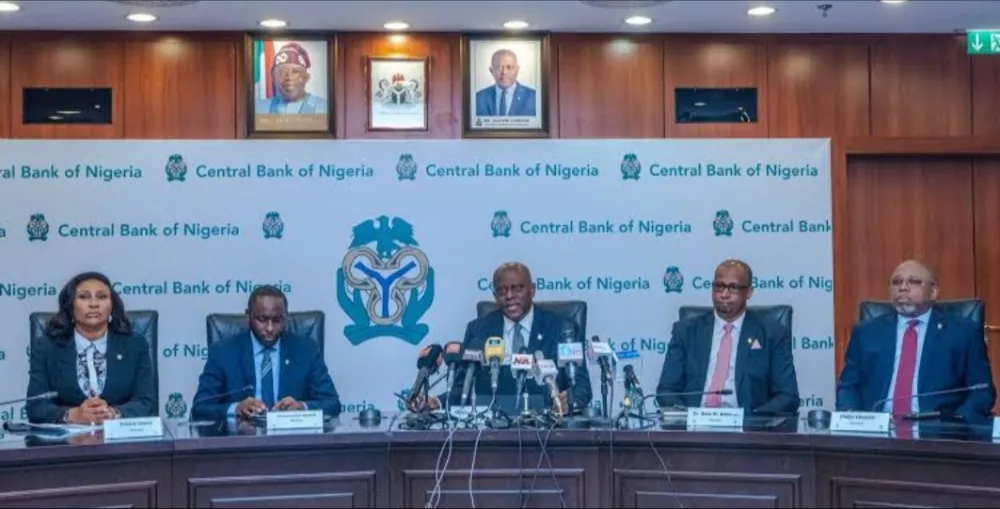
The Central Bank of Nigeria (CBN) has chosen to hold the Monetary Policy Rate (MPR) at 27.5%, following the conclusion of its 301st Monetary Policy Committee (MPC) meeting held in Abuja from July 21–22. The decision, announced by CBN Governor Olayemi Cardoso, underscores the apex bank’s cautious approach in balancing inflation control with economic recovery.
In a press briefing streamed live on the CBN’s YouTube channel (@cenbank), Cardoso reaffirmed the bank’s commitment to maintaining macroeconomic stability amid mixed domestic and global financial conditions.

Monetary Policy Tools Remain Unchanged
The MPC voted unanimously to retain several key monetary policy parameters:
-
Monetary Policy Rate (MPR): 27.5%
-
Cash Reserve Ratio (CRR): 50% for Deposit Money Banks; 16% for Merchant Banks
-
Liquidity Ratio: 30%
-
Asymmetric corridor: +500/-100 basis points around the MPR
These decisions reflect the committee’s resolve to consolidate recent disinflation gains while remaining vigilant against new inflationary pressures.
Inflation Eases, But Risks Persist
Cardoso pointed to a gradual decline in headline inflation, which fell to 22.22% in June 2025 from 24.23% in March, according to the National Bureau of Statistics (NBS). The easing was attributed to lower fuel prices and a relatively stable naira, following a conservative monetary stance in May when the CBN also maintained the MPR at 27.5%.
However, the governor warned that Nigeria still faces substantial headwinds. Declining global crude oil prices—due to increased non-OPEC production—and volatility in global markets remain external risks to fiscal stability. Domestically, persistent food supply disruptions from flooding and insecurity continue to inflate food prices, which form a large portion of the inflation basket.
“We are confronted with increased liquidity injections into the banking system,” Cardoso said, referencing rising FAAC allocations. “This underscores the need for tight monetary conditions to avoid inflationary resurgence.”

Public Sentiment and Market Reactions
Ahead of the meeting, a CBN-conducted survey revealed 62.4% of Nigerian households were in favor of cutting interest rates to ease borrowing, while 40.3% supported maintaining or raising rates to combat inflation.
Market analysts were split. FBNQUEST had anticipated a rate cut, citing easing inflation and a stable foreign exchange environment. In contrast, Cordros Securities cautioned against premature policy easing, warning it could trigger volatility in the forex market.
The IMF projects Nigeria’s inflation to decline to 18% by 2026, giving some room for gradual easing, though Cardoso remains steadfast in his orthodox monetary strategy.
Liquidity Oversupply and Exchange Rate Stability
To stabilize the naira and encourage foreign investment, the CBN continues to maintain high yields on Open Market Operation (OMO) bills, which are critical in attracting foreign portfolio inflows. These inflows help shore up the naira and prevent excessive demand for U.S. dollars in the speculative forex market.
Cardoso also reiterated efforts to unify Nigeria’s foreign exchange market segments, clear legacy FX obligations, and implement market-friendly reforms aimed at enhancing investor confidence.
Financial Inclusion and Sector Reforms
Beyond monetary policy, the CBN is pushing forward with its financial inclusion agenda. Cardoso highlighted the bank’s goal of achieving 80% adult financial inclusion by 2026 through strategic partnerships with fintech companies and commercial banks.
He also emphasized ongoing efforts to refine corporate governance frameworks within Nigeria’s banking sector as part of the broader bank recapitalization exercise aimed at ensuring long-term financial system stability.
In a separate initiative, the CBN vowed to clamp down on Point-of-Sale (POS) operators who charge customers above stipulated transaction fees, and recently selected five banks to pilot a cash swap program, barring unauthorized POS agents in Lagos and Abuja.

Looking Ahead
The MPC’s decision to maintain its current policy rate reflects a delicate balancing act. While inflation is on a downward trend, underlying structural risks—from global oil dynamics to domestic insecurity—require cautious policy management.
Governor Cardoso expressed confidence in the CBN’s long-term strategy, stating that the full effects of its current policies would become more evident in 2026, as stability takes firmer root across Nigeria’s monetary and financial systems.
The next MPC meeting is scheduled for September 22–23, 2025, where analysts expect further discussions on potential adjustments if inflation continues to trend downward.
Follow @cenbank for live updates and future press conferences.