Iran Executes Three More Over Alleged Israel Ties as Post-War Crackdown Intensifies

June 28, 2025
In the aftermath of a brutal 12-day war with Israel, Iran has executed three more men accused of collaborating with the Israeli intelligence agency Mossad—bringing the total number of executions tied to alleged Israeli espionage to six.
The executions, carried out just 48 hours after a ceasefire agreement was announced, were described by state-affiliated ISNA News Agency as part of a broader “season of traitor-killing.” Iranian authorities say the men were convicted of espionage, but human rights advocates are pushing back, arguing that the individuals—reportedly Kurdish day laborers—had no access to sensitive information and were denied fair trials.
“This is a very corrupt regime, and there is no due process in Iran,” said Azadeh Pourzand, a senior fellow and expert on Middle Eastern affairs at the Centre for Middle East and Global Order, in an interview with ABC News.

Fear and Repression in the Wake of War
The executions follow the conclusion of the bloodiest military clash between Iran and Israel in recent years, which Iranian authorities say left at least 627 dead, 4,870 injured, and inflicted widespread damage on the country’s infrastructure.
Despite speculation that the war’s toll on Iran’s military leadership and the mystery surrounding Supreme Leader Ayatollah Ali Khamenei’s health could lead to regime change, Tehran’s theocratic government remains firmly in control.
Analysts warn, however, that the regime—now perceived as “wounded and defeated”—could become even more repressive in the days ahead.
“Historically, this phase is when the Islamic Republic becomes most dangerous,” said Pourzand. “We’re seeing systematic repression designed to instill fear and demonstrate strength, both domestically and on the world stage.”
Arrests, Surveillance, and an “Intelligence Jihad”
During the 12-day war, Iranian intelligence reportedly arrested over 700 individuals accused of having ties to Israel. Many of them, activists say, were targeted based on vague accusations and were denied legal representation.
Human rights experts are particularly alarmed by a newly announced amendment to Iran’s Espionage Law for Dealing with Citizens, as well as the launch of a special intelligence committee tasked with monitoring citizens’ online activity. State media has branded this sweeping surveillance campaign as an “intelligence jihad.”
“There are security forces patrolling the streets in full force. We hardly dare go out,” said Samira, a 23-year-old student activist in Tehran. “It’s an extremely terrifying time. I think we’re about to enter a phase of further paralysis and suffocation.”
Public Fear and Distrust on All Sides
Many Iranians who opposed the war say they now fear retribution not from Israel—but from their own government.
“I cried once when the war started, and again when the ceasefire was announced,” said a 37-year-old woman from Rasht, who declined to be named for safety reasons. “We fear the Islamic Republic just as much as we fear Israel.”
While some Iranians initially held out hope that Israel’s offensive could lead to political change or weaken the regime, others remained skeptical.
“It would be foolish to believe Israel’s objective was ever to free us,” said Samira. “They made it clear their only goal was the destruction of Iran’s nuclear capabilities.”
Khamenei Reemerges, Vows Defiance
After weeks of absence, Supreme Leader Khamenei made his first public appearance since the war’s onset on Thursday. In a pre-recorded televised message, he declared the conflict a victory.
“This is one of the greatest divine blessings,” he said, praising Iran’s ability to strike Israeli defense systems. “It shows the Zionist regime that any aggression against the Islamic Republic will come at a cost—and thankfully, that’s exactly what happened.”
Yet for many Iranians, that “cost” appears to be falling hardest on the shoulders of ordinary citizens.
“What’s already started is quite horrific,” said Pourzand. “Unfortunately, I think what’s coming will be even worse.”

A Pattern of Repression
The latest crackdown mirrors earlier government responses to civil unrest, such as the 2022 “Woman, Life, Freedom” protests sparked by the death of Mahsa Jina Amini in police custody. That movement saw hundreds killed, thousands jailed, and several executed as the regime clamped down on dissent.
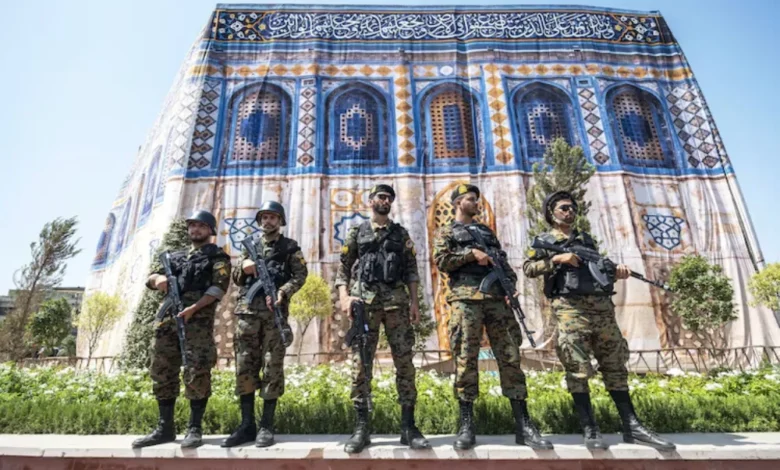
Even now, with the war over, the Iranian government appears to be leveraging the conflict to justify a sweeping new wave of repression under the guise of national security.
“This is collective punishment against ordinary people,” Pourzand said. “It’s not about national defense—it’s about control.”
As international attention shifts away from Iran’s domestic crisis and toward broader geopolitical concerns, human rights groups fear that the regime will face little resistance in escalating its post-war crackdown—leaving millions of Iranians caught between political repression at home and external threats abroad.