FBI Defends Agents After Senator Alex Padilla Forcibly Removed from DHS Press Conference in Los Angeles

June 13, 2025
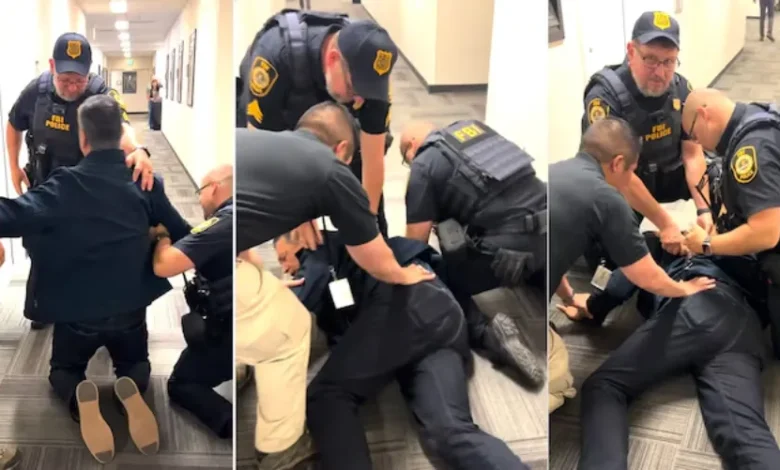
A political firestorm erupted Thursday after California Senator Alex Padilla was forcibly removed, pushed to the ground, and handcuffed during a Department of Homeland Security press conference in Los Angeles. The event, hosted by Secretary Kristi Noem, was abruptly disrupted when Padilla reportedly attempted to interject mid-event, prompting a swift response from federal law enforcement officers.
In the aftermath, FBI Deputy Director Dan Bongino took to X (formerly Twitter) to defend the actions of the agents involved, stating that law enforcement officers acted “completely appropriately” in the high-tension encounter.
What Happened at the DHS Briefing?
The incident took place on June 12, 2025, as Homeland Security Secretary Kristi Noem addressed the media on border security and immigration policy. Eyewitnesses say Senator Padilla—who has been an outspoken critic of recent DHS policy changes—entered the room unannounced and attempted to speak over the secretary during the live broadcast.
Footage from the scene shows a tense moment as federal agents quickly intervened, with at least one officer seen pushing Padilla to the ground before placing him in handcuffs. The altercation has since gone viral, sparking intense debate online and in the political arena.
FBI Responds: “No Violation of Protocol”
In his official statement posted on X, Deputy Director Bongino claimed Padilla was not wearing a security pin—a mandatory identification marker for public officials in high-security areas—and that he “physically resisted law enforcement” when officers attempted to escort him from the premises.
“Our FBI personnel acted completely appropriately while assisting Secret Service and we are grateful for their professionalism and service,” Bongino wrote.
The FBI’s involvement reportedly came as part of a joint security detail with the Secret Service, which is tasked with protecting federal officials and securing classified or high-profile government events.
Senator Padilla’s Office Pushes Back
The Office of Senator Padilla issued its own statement shortly after the incident, condemning the use of force and calling the senator’s removal “an outrageous and unnecessary escalation.” Staff claim Padilla was there to peacefully raise concerns over DHS policies affecting immigrant communities in California.
“He was not armed, not threatening, and had every right as a sitting U.S. Senator to address issues affecting his constituents,” the statement read. “What happened today was a blatant overreach by federal agents.”
At press time, Senator Padilla had been released and is reportedly considering formal action over what his team calls a violation of his constitutional rights.
Reactions Pour In
The incident has triggered fierce reactions from both sides of the political spectrum. Supporters of Secretary Noem and law enforcement officials argue that Padilla’s actions were disruptive and inappropriate, particularly in a tightly controlled federal press environment.
Critics, however, say the incident reflects a growing trend of aggressive policing and political retaliation against dissenting voices in federal spaces.
Civil liberties organizations, including the ACLU of Southern California, have issued statements demanding a full investigation. “The optics of a Latino senator being tackled and handcuffed by federal agents at a public press conference are deeply troubling,” the group stated.
What’s Next?
With tensions mounting between state and federal officials, calls are growing for a Congressional review of the incident. Several lawmakers have already issued letters demanding that the FBI and Secret Service clarify their protocols regarding the treatment of elected officials.
Meanwhile, Secretary Noem’s office has remained largely silent, referring all questions to law enforcement.
As this story continues to develop, the confrontation between Senator Padilla and federal officers may mark a flashpoint in the broader national conversation around political dissent, civil rights, and the limits of federal authority.