Democracy Day 2025: How Nigeria’s Digital Future Threatens Its Democratic Present

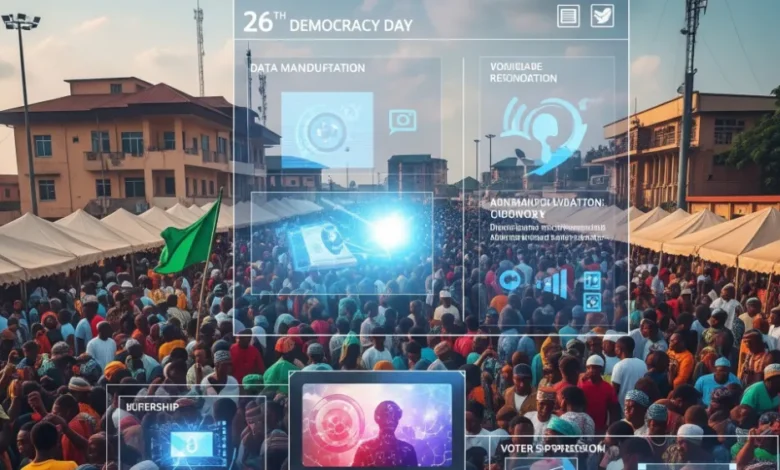
As Nigeria marks 26 years of uninterrupted civilian rule, Democracy Day 2025 is both a moment of celebration and a stark reminder of the challenges that lie ahead. While the endurance of democratic governance is no small feat, the digital age has introduced new threats to civil liberties, political transparency, and public accountability.
Technology—once hailed as a transformative force for open governance and civic participation—is increasingly being weaponised by the Nigerian state to suppress dissent, control information, and compromise democracy.
Over the past five years, a pattern has emerged: from internet shutdowns to surveillance and social media censorship, the Nigerian government has repeatedly used technology in ways that undermine the rights of its citizens. As we commemorate this important day, it’s crucial to reflect on how these digital interventions have shaped—and in some cases, distorted—Nigeria’s democratic journey.
10 Key Incidents That Show Tech Being Used Against Democracy in Nigeria (2020–2025)
1. The #EndSARS Internet Shutdown & Surveillance (October 2020)
During the historic #EndSARS protests against police brutality, the federal government imposed a sweeping internet blackout, effectively silencing demonstrators and restricting real-time coverage. In the aftermath, reports revealed the use of facial recognition, call metadata, and social media tracking to monitor and intimidate protesters.

2. The Twitter (Now X) Ban (June 2021 – January 2022)
After Twitter removed a tweet from then-President Buhari, the government suspended the platform for seven months, cutting off millions from a key space for political discourse. The ban was lifted only after Twitter agreed to strict new conditions, setting a precedent for state-imposed censorship.
3. NIN-SIM Linkage Policy and Digital Exclusion (2021–2023)
A nationwide policy mandating SIM card linkage with the National Identification Number (NIN) left millions of Nigerians disconnected, especially in rural and underserved communities. Critics argued the move compromised citizens’ access to banking, voting, and communication—deepening digital inequality.
4. Election-Time Internet Blackouts (2023 General Elections)
Multiple reports of strategic internet outages in opposition strongholds during the 2023 elections sparked outrage. Civil society organisations accused the government of digital voter suppression, even as officials denied any involvement.

5. Failure of BVAS and IReV Systems (2023 Elections)
The Bimodal Voter Accreditation System (BVAS) and INEC Results Viewing Portal (IReV) were introduced to increase electoral transparency. However, technical failures and inconsistent uploads undermined public trust in the electoral process, fueling suspicions of manipulation.
6. Pegasus Spyware Allegations (2022)
Investigations revealed that Nigerian security agencies had acquired Pegasus spyware, capable of covertly hacking smartphones. It was allegedly deployed to monitor journalists, opposition leaders, and activists, in violation of international human rights standards.
7. State-Sponsored Disinformation Campaigns (2023–2024)
Analysts uncovered extensive bot networks and fake accounts spreading pro-government propaganda online. These efforts, aimed at discrediting the opposition and civil society, polarised public opinion and distorted democratic dialogue.
8. Internet Throttling During #EndBadGovernance Protests (August 2024)
During mass protests in August 2024, activists and watchdog groups documented nationwide internet slowdowns that disrupted coordination and reduced protest visibility. Thirty-six advocacy groups called it a clear violation of free expression and assembly rights.
9. The Controversial Social Media Bill (2023–2024)
Following the Twitter ban, the government introduced a bill seeking to regulate social media content and users, including vague definitions of “misinformation.” Though not yet passed, the bill signals a growing intent to control online speech.
10. Cybercrimes Act Amendments (2025)
Early in 2025, updates to the Cybercrimes Act granted broader surveillance powers to the state under the pretext of national security. Human rights groups have raised alarms over the lack of judicial oversight and potential for abuse, warning it could lead to targeted harassment of political opponents.

Technology: Democracy’s Double-Edged Sword
These ten events expose a critical truth: while digital tools can strengthen democracy, they can also be exploited to weaken it.
Technology in Nigeria has become a double-edged sword—providing both the infrastructure for citizen empowerment and the machinery for state control. Protesters, journalists, and everyday Nigerians have shown incredible resilience in resisting these digital overreaches, but the systemic risks remain.
What Must Be Done?
To safeguard Nigeria’s digital democracy, several steps are urgent:
-
Establish legal protections for digital rights and privacy
-
Implement independent oversight of government surveillance technologies
-
Promote digital literacy to help citizens spot disinformation and resist manipulation
-
Strengthen international pressure against authoritarian digital policies
A Digital Test of Nigeria’s Democratic Future
As Nigeria commemorates Democracy Day 2025, it’s not just about remembering 1999’s return to civilian rule—it’s about recognising the new frontlines of democratic struggle.
In a world where algorithms can censor, surveillance can silence, and connectivity can be weaponised, the question is no longer whether democracy will survive, but how it will adapt. The future of Nigerian democracy may depend less on voting days and more on who controls the tech—and how they choose to use it.
Democracy is not just the right to vote; it is the right to speak, organise, resist, and be heard—online and offline.