U.S. Embassy in Nigeria Now Requires Public Social Media Profiles for Student and Exchange Visa Applicants

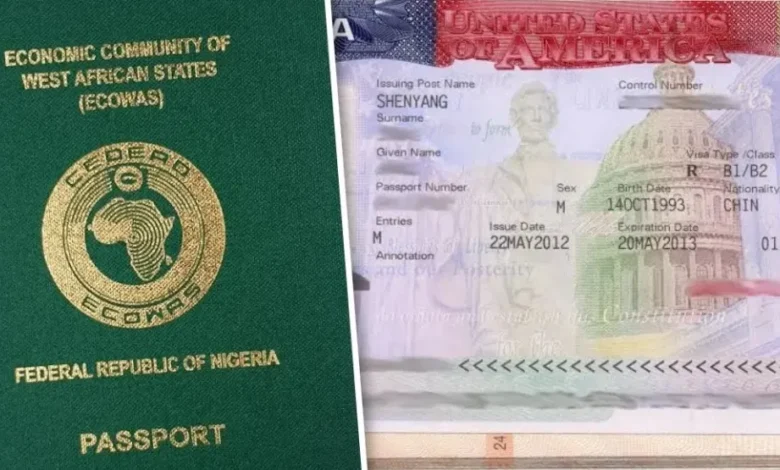
In a move aimed at enhancing national security and intensifying background checks, the United States Mission in Nigeria has issued a new directive to all applicants seeking F, M, and J visas — the categories designated for students and exchange visitors. Effective immediately, applicants must set their personal social media accounts to “public” to enable a seamless review of their online presence.
The announcement was made on Monday, July 1, 2025, via the Mission’s official X (formerly Twitter) account and applies to all nonimmigrant visa categories associated with academic, vocational, and cultural exchange programs.
“Effective immediately, all individuals applying for an F, M, or J nonimmigrant visa are requested to adjust the privacy settings on all of their personal social media accounts to ‘public,’” the U.S. Mission stated.
What’s Behind the Policy?
The new rule is a part of broader changes in visa screening processes introduced by the U.S. Department of State. These changes reflect increased efforts to use all available information — including digital footprints — to evaluate the eligibility and intentions of visa applicants.
“We use all available information in our visa screening and vetting to identify visa applicants who are inadmissible to the United States, including those who pose a threat to U.S. national security,” the statement said.
The focus is especially on F (academic), M (vocational), and J (exchange) visa holders — categories heavily populated by students and young professionals. The vetting now includes deep checks into social media activity, interactions, and online behavior, which could reveal discrepancies between declared visa purposes and actual intentions.
Digital Footprint Now a Visa Decider
The U.S. government’s expanded vetting policy is rooted in the belief that a visa is a privilege, not a right. The enhanced scrutiny — first proposed under former President Donald Trump — remains active and places heavy emphasis on online transparency.
The embassy explains that setting social media accounts to public enables officials to verify identities and confirm that applicants meet eligibility requirements.
This new layer of scrutiny is already having real-world consequences.
Nigerian Businesswoman Denied Entry Despite Valid Visa
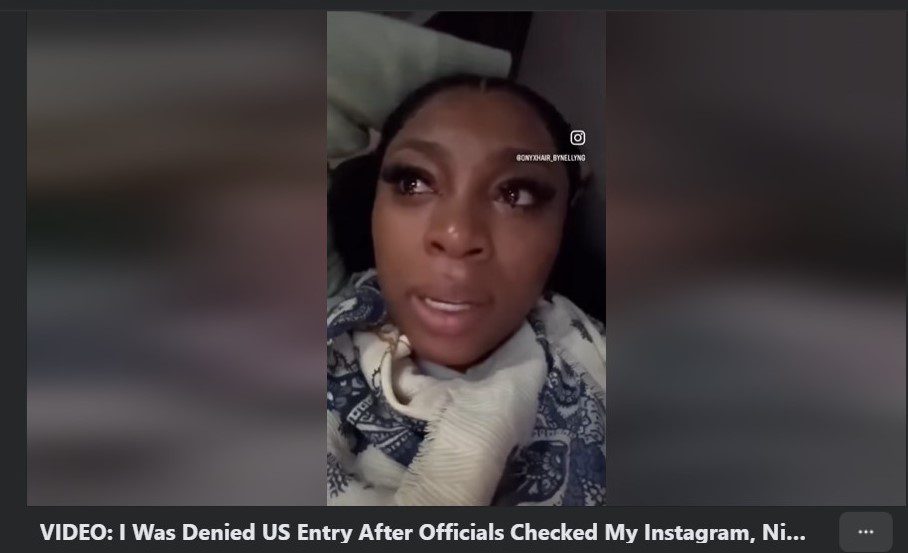
Just days before the directive was published, a Nigerian businesswoman shared a viral video detailing how she was detained for 24 hours and denied entry into the U.S. despite holding a valid B1/B2 visa, typically issued for tourism or business.
The woman, who had traveled to Texas to attend a trade fair, was stopped at the airport, interrogated, and ultimately sent back to Nigeria after immigration officers reportedly reviewed her Instagram account and private chats.
“Apparently, my Instagram says different. They even checked all my messages with my customers,” she recounted tearfully. “The customers I’ve been telling we are coming — they used that against me.”
According to her, the U.S. officers claimed her online activity conflicted with her stated reason for entry, leading to the revocation of her entry permission.

Social Media: A Visa Risk or a Verification Tool?
Reactions to the incident have been mixed. While some sympathized with the businesswoman, others pointed out that any contradiction between visa purpose and online behavior could trigger suspicion.
One user wrote:
“This isn’t about account details but conversations she had or is having. If you say you’re attending a trade fair but your messages suggest you’re importing goods, it contradicts your visa type.”
Another speculated that insufficient proof of funds may have contributed to the denial:
“She probably didn’t have up to $15,000. U.S. immigration doesn’t just deport over visa classification errors — the funds matter.”
What Does This Mean for Visa Applicants?
This policy change marks a fundamental shift in how U.S. embassies in Nigeria and elsewhere assess visa applications. Social media is no longer private — it’s part of your application. Any misleading or inconsistent content can be flagged.
Key Takeaways for Nigerian Visa Applicants:
-
Set social media accounts to public if you’re applying for an F, M, or J visa.
-
Review your posts, bios, and conversations for consistency with your visa purpose.
-
Be honest and transparent about your intentions — both on your application and online.
-
Expect more thorough vetting, including digital footprint checks, even for valid visas.
-
Remember that a valid visa does not guarantee entry; final decisions are made at the point of entry.
Final Thoughts
The United States’ renewed focus on online behavior as part of its visa screening process underscores the growing intersection between digital life and international mobility. As the line between public and private continues to blur, visa applicants must now ensure that their digital identities align with their declared travel intentions.
While the policy aims to enhance national security, it also raises important questions about privacy, access, and the evolving standards for global movement. For now, Nigerian students, exchange visitors, and travelers must tread carefully — both in application forms and online.