June 24, 2025
President Donald Trump’s decision to launch military strikes on Iran’s nuclear facilities has ignited a political storm on Capitol Hill, where a bipartisan coalition of lawmakers is challenging the constitutionality of the operation and calling for Congress to reassert its authority over U.S. military actions.
While Trump and his administration defend the strike as a legal and necessary act to prevent Iran from obtaining nuclear weapons, some Democrats and Republicans argue the president overstepped his constitutional powers by failing to consult Congress prior to the attack.

War Powers Under Scrutiny
At the heart of the dispute is the 1973 War Powers Resolution, a law that requires the president to consult Congress before introducing U.S. forces into hostilities and to withdraw troops within 60 days unless Congress grants approval.
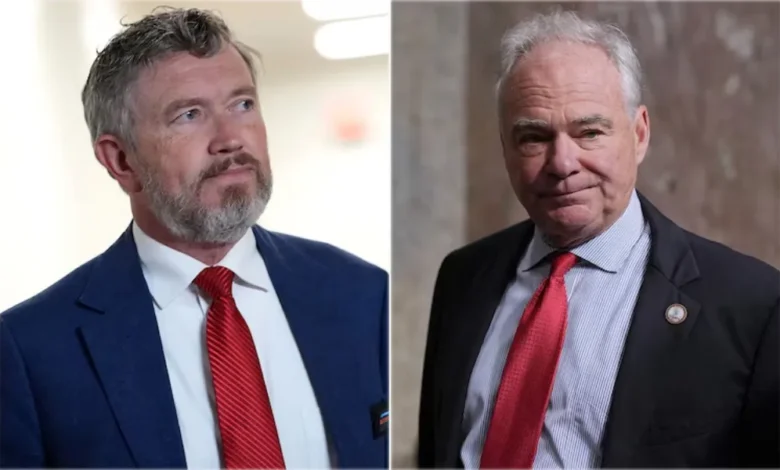
Lawmakers from both parties are now introducing War Powers Resolutions aimed at curbing Trump’s authority to take further military action against Iran without congressional consent. Among them are:
-
Rep. Thomas Massie (R-KY) and Rep. Ro Khanna (D-CA), who introduced a resolution in the House.
-
Sen. Tim Kaine (D-VA), who is spearheading a similar effort in the Senate.
“This is the U.S. jumping into a war of choice at Donald Trump’s urging without any compelling national security interest,” Kaine said during a Sunday appearance on Face the Nation. “We should not be risking American lives without a full debate and vote in Congress.”
Massie echoed that concern, saying there was “no imminent threat” to justify the president’s unilateral action.
Capitol Leaders Divided
While House Speaker Mike Johnson defended Trump’s authority as commander-in-chief, stating that “the president made an evaluation that the danger was imminent enough,” House Minority Leader Hakeem Jeffries questioned the legality of the strike.
“We’ve seen no evidence that this strike was justified under the War Powers Act or the Constitution,” Jeffries said Monday. “Not a scintilla of evidence has been presented to show there was an imminent threat to the United States.”
Lawmakers are expected to receive classified briefings on the Iran strike this week. The debate could complicate the passage of a broader legislative package to fund key elements of Trump’s domestic agenda, which is currently under negotiation in Congress.
Escalation Concerns After Iranian Retaliation
The legislative pushback comes just one day after Iran launched missiles at the Al Udeid U.S. military base in Qatar in retaliation for the U.S. airstrikes. All but one missile was intercepted, and there were no reported casualties or significant damage.
Despite the exchange, Trump struck a more restrained tone on social media, thanking Iran for “giving us early notice” and urging peace:
“Perhaps Iran can now proceed to peace and harmony in the region, and I will enthusiastically encourage Israel to do the same,” he wrote on Truth Social.
Still, he warned of further action if Iran fails to negotiate:
“If peace does not come quickly, we will go after those other targets with precision, speed, and skill.”
Trump Lashes Out at Critics
In typical fashion, Trump pushed back against congressional critics—specifically targeting Rep. Massie on social media, calling him “not MAGA” and vowing to support a primary challenger against him.
This isn’t the first time Trump has clashed with Congress over military powers. In 2019, lawmakers passed a bill to end U.S. support for the Saudi-led war in Yemen, which Trump vetoed. And in 2020, after the assassination of Iranian General Qassem Soleimani, Congress passed a measure to limit Trump’s war powers related to Iran—only for it to be vetoed again.
Administration: Strike Was Lawful
The Trump administration maintains the Iran strike was legally justified. Defense Secretary Pete Hegseth said the White House complied with the War Powers Resolution by notifying Congress “after the planes were safely out.”
Vice President JD Vance and Secretary of State Marco Rubio both emphasized that the U.S. is not at war with Iran and characterized the operation as a defensive measure to prevent a nuclear crisis.
“What happens next is up to the Iranians,” said Vance, suggesting that the U.S. is open to diplomacy if Tehran chooses to de-escalate.
What’s Next?
Congressional resolutions challenging Trump’s military authority may face an uphill battle in the Republican-controlled House, and even if they pass both chambers, a presidential veto would be difficult to override.
Still, the growing bipartisan concern signals a broader discomfort with unchecked executive war-making powers—and a renewed focus on the constitutional role of Congress in decisions of war and peace.
As the conflict with Iran continues to unfold, the U.S. government now finds itself at a constitutional crossroads—with war, diplomacy, and democratic oversight all hanging in the balance.